Showing posts with label robben ford. Show all posts

Sunday, February 1, 2009

ROBBEN FORD

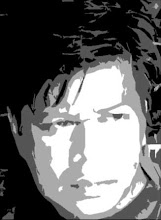
Robben Ford, born December 16, 1951, Woodlake, California, is an American blues, jazz and rock guitarist.

Career

Ford was born in Woodlake but raised in Ukiah, California, and began playing the saxophone at age 10, picking up the guitar at age 13. Robben and his brothers Mark (mouthharp) and Patrick Ford (drums) had a band they named the Charles Ford Blues Band in honor of their father.

Ford began playing professionally at age 18 when the Charles Ford Blues Band got a gig backing Charlie Musselwhite. The band also recorded two albums The Charles Ford Band and Discovering the Blues. Next Ford put together a band with Bay Area musicians that became Jimmy Witherspoon's backup band. Ford recorded two albums with Witherspoon, Live and Spoonful'. The Ford Blues Band reunites periodically, and released live albums in the 1980s and 1990s.

In the 1970s, Ford began to branch out into Jazz fusion, and joined L.A. Express led by saxophonist Tom Scott in 1974. That same year they backed George Harrison on his American tour. In addition to recording fusion albums, they served as Joni Mitchell's backup band on Hissing of Summer Lawns and the live album, Miles of Aisles.

After leaving L.A. Express in 1976, Ford recorded his solo album, The Inside Story with a band that was to become the Yellowjackets. He went on to play a starring role on the first two Yellowjackets albums, although he was listed as a guest artist due to recording contract arrangements.

Ford worked briefly with Miles Davis in 1986; he can be heard on Davis' Montreux box set. Ford released his next album, called Talk to Your Daughter in 1988, a return to his blues roots. In 1989 he joined Philippe Saisse, Marcus Miller and J.T. Lewis in the cast of The Sunday Night Band for the second and final season of the acclaimed late-night NBC television musical performance program, Sunday Night.[1] His best work in the 1990s include Robben Ford & the Blue Line, and Tiger Walk. In addition to recording and touring with his own blues band, Ford continued to tour and play with other bands/artists such as Jing Chi (his fusion band), Greg Allman and Phil Lesh. He has received nominations for four Grammy Awards.

Several Ford tribute bands exist, a statement to his artistry and popularity with the cognoscenti.[citation needed]

Ford was named one of the "100 Greatest Guitarists of the 20th Century" by Musician magazine.

Ford uses Dumble Amplifiers. When travelling abroad he tends to use rented Fender amplifiers along with a Zendrive overdrive pedal by Hermida Audio. Guitar manufacturer Fender used to make a Robben Ford signature guitar, although lately Ford tends to favour Gibson Les Pauls and a custom-made model by Sakashta Guitars.

Ford is married to the cabaret singer, Anne Kerry Ford, and collaborated with her on various projects.

Discography

Discovering the Blues (1972)
The Charles Ford Band (1972)
Miles of Aisles (1974)
Tom Cat (1974)
Schizophonic (1976)
Jimmy Witherspoon & Robben Ford Live (1976)
The Inside Story (1979)
Yellowjackets (1980)
Love's A Heartache (1983)
Reunion Live (1984)
Talk to Your Daughter (1988)
Robben Ford & the Blue Line (1992)
Mystic Mile (1993)
Handful of Blues (1995)
Blues Connotation (1996)
Tiger Walk (1997)
Blues Collection (1997)
The Authorized Bootleg (1998)
Supernatural (1999)
Sunrise (1999)
A Tribute to Paul Butterfield (2001)
Anthology: The Early Years (2001)
Blue Moon (2002)
Keep on Running (2003)
City Life (2006)
Truth (2007)


Readmore...

Friday, January 30, 2009

YELLOWJACKETS

In 1977, Robben Ford assembled a group of veteran session musicians to record his album The Inside Story. The trio of musicians, which included keyboardist Russell Ferrante, bassist Jimmy Haslip and drummer Ricky Lawson, soon discovered a certain "chemistry" and musical affinity that led to their formation of Yellowjackets. The Inside Story being mainly instrumental, Robben Ford's record label wanted him to record another album that was more pop and vocal oriented. The group, known as the Robben Ford Group, preferred to pursue the instrumental route, and a "band within a band" was formed. This same group with Robben Ford on guitar recorded digital demos that were eventually accepted by Warner Brothers, and Yellowjackets was born. While Robben's contributions would diminish over the years to being a guest artist, the group known as Yellowjackets would flourish.

Their debut album Yellowjackets made serious waves in jazz radio, garnering public and critical acclaim. Mirage A Trois followed in its footsteps. While they went on a brief hiatus to pursue other projects, they reassembled in time for the 1984 Playboy Jazz Festival, adding percussionist Paulinho Da Costa and their new lead voice, sax man Marc Russo. This landmark concert paved the way for their eventual success both on the Billboard Jazz charts and concert venues around the world, and resulted in the third spicy Yellowjackets album Samurai Samba. 1986 saw the group moving over to MCA Records to record Shades, the title track being written by Donald Fagen (of Steely Dan fame) as a tribute to the many "shades" he heard in the group's music.

With their album Four Corners, Ricky Lawson departed to join Lionel Richie's touring band and was replaced by the versatile William Kennedy. This rock-solid lineup took the Yellowjackets into new territory, exploring world beats and densely-populated soundscapes that reflected a growing maturity in their music. CloudjacketsPolitics, the follow-up to Four Corners, mellows out, and the group sheds some of the electronic elements and starts exploring acoustic sounds. Marc Russo's final recording with Yellowjackets, The Spin, was recorded in Oslo, Norway by noted engineer Jan Erik Kongshaug (well known for his work on the ECM label), and the Jackets proved that they could belt out acoustic jazz with the best!

Greenhouse ushered in a new era. With Marc gone, the Yellowjackets trio would record one of their most adventurous albums to date, featuring ace big band arranger and saxophonist Bob Mintzer on many of the tracks, and string accompaniments on a handful of others. Shortly thereafter, Bob Mintzer became a bona fide member of Yellowjackets. The Jackets also recorded on one of Bob Mintzer's dmp Records projects, One Music. Live Wires captures the group in concert with Mintzer at the helm. The two albums that followed, Like A River and Run For Your Life, reflected a growing interest in straight-ahead acoustic jazz.

With 1995's Dreamland, Yellowjackets returned to their first record label, Warner Brothers, producing their most relaxed, and relaxing, recording to date. Blue Hats is more spontaneous than its predecessors, musically rich and particularly revealing in showing how Yellowjackets have evolved since that landmark first album. Club Nocturne, their latest studio recording, achieves great crossover appeal with the guest vocalists Kurt Elling, Jonathan Butler and Brenda Russell. And while the Yellowjackets of today sound little like the original Yellowjackets from fifteen-plus years ago at first listen, the unmistakable talents of the individuals involved still have the unique signatures that shine through regardless of their musical setting, whether it be blistering-hot fusion or full-blown acoustic jazz. In other words, their music has evolved and matured considerably, but there's no mistaking that it is Yellowjackets you are hearing.

At the beginning of 1999, William Kennedy departed Yellowjackets to pursue other interests, and Peter Erskine joined the group for the balance of the year. Peter had played with Bob Mintzer on some of his big-band and small group recordings, so it was a natural that he would become one of the Yellowjackets. Unfortunately, Erskine's busy schedule would conflict with the band's, and he would depart by year's end without ever having recorded an album with the group.

In early 2000, the Yellowjackets were once again a trio, with Russell, Jimmy and Bob using different drummers as they continue touring throughout the year. Two of the fine drummers they've hooked up with were Marcus Baylor and Terri Lynn Carrington. For 2000, the band also saw a change in management, and Jimmy's long-awaited (and long-delayed) solo recording, Red Heat, was released later in the summer.

In 2001, the band self-released the pivotal live "Mint Jam" recording, with Marcus Baylor now essentially the band's full-time drummer. Since that time, the Jackets signed a deal with the HeadsUp International label, and have since released "Time Squared", the holiday release "Peace Round" and, most recently, "Altered State".

What's In A Name? If you're expecting something cute or meaningful in the naming of the group, you may be disappointed. Russell Ferrante relates the following on how the group's name was chosen: "I wish there was a clever rationale, but there really isn't. At the time we were making our demo in hopes of landing a recording contract, we were still the "Robben Ford Band". We had recorded one record with Robben, (primarily instrumental) but his record company was "encouraging" him do do something more pop and vocal oriented. As we also wanted to continue playing instrumental music, we all decided to form a "band within a band" so to speak. At the demo session Jimmy brought in a sheet full of possible names, most just awful. The one that popped out was Yellowjackets as it seemed to connotate something lively, energetic, and something with a "sting". That's really about as deep as it went. Once you choose a name, you're stuck with it so here we are, 16 years later, grown men playing in a band named 'Yellowjackets.'"
Readmore...