 Over the past twenty five years, as contemporary instrumental music has evolved through many different stylistic names and formats--from "fusion" to "rhythm and jazz" to "smooth jazz"--the one constant in both popularity and musical ingenuity has been Spyro Gyra. Jay Beckenstein's roaring, emotional saxophones have been the anchor of the band's multi-genre signature sound, but there's always been more to his artistry and musical soul than Spyro's discography can document.
No doubt as Beckenstein was itching all these years to do a solo venture, Spyro fans were just as eager to check out a fuller scale, more personal revelation--a deeper portrait of the man behind the music. After 23 albums on three labels--including last year's Windham Hill Jazz debut "Got the Magic"--Beckenstein makes an exciting departure from his almost annual ensemble recording schedule with "Eye Contact", his highly anticipated debut.
Never one to rest on his formidable laurels, Beckenstein had been after his former labels MCA and GRP to do a project of his own for years, but the ongoing success of the band and his instant identification as leader made such an idea seem self-competitive. He quenched part of his desire by producing solo albums in the 90's for bandmembers Tom Schuman and Dave Samuels. GRP finally agreed and Beckenstein got started on a few of the album's tracks in 1998, only to suspend the work when Spyro Gyra signed on with Windham Hill.
Windham Hill is now pleased to honor that original commitment, and Beckenstein has delivered a knockout punch with the help of musicians and producers Chieli Minucci (Special EFX), Jason Miles (Miles Davis, David Sanborn), Jeff Beal and Chuck Loeb. Beckenstein also likes to refer to "Eye Contact" as "the Bass Player Magazine project" thanks to contributions by world class bassists Mark Egan, Marcus Miller, Will Lee, John Patitucci and South African player Bakithi Kumalo.
"When you've played in the same band as long as I have and have a recognizable sound, there's bound to be some stylistic overlap," says Beckenstein. "But this project gave me the opportunity to hook up, play with and learn from other great composers, musicians and producers. The trick to survival in the music business is finding ways to avoid creative ruts, and I've found that pushing the envelope, bouncing ideas off of new people, was a great and necessary growth opportunity for me."
While Beckenstein has always taken it upon himself to produce Spyro Gyra's recordings, he was ecstatic to discover a newfound freedom in collaborating for the first time with carefully selected outside producers. "Because of the unique Spyro dynamic, my own productions with them involved taking the best ideas from each member and acting as overseer of a group process. You always want to make sure that the guys have their opportunities to be heard, in both their ideas and their instruments," he says. "Here, I went from producing a band to assembling a team of new players, each to create a certain effect. I've been a longtime admirer of each producer I work with here. Chuck and Chieli are experts using digital recording, Jason is brilliant with sounds and samples and voices, and Jeff approaches everything like an orchestrator. Each helps me achieve a unique sound and go to places I'd never thought of before."
Over a pitter patter percussion pattern, Beckenstein's sweet soprano swirls magnificently around Minucci's breezy acoustic guitar lines on "Sunrise." Chuck Loeb's acoustic improvisations then ease in and around Beckenstein's clever alto and tenor horn doubling and Mark Egan's winding basslines on the upbeat "The Other Side." The bluesy, retro-soul flavored "Northline" finds Loeb's crying guitar line and organ simmering around the alto, while the title track features the Beckenstein and the guitarist creating pure romantic passion in tandem. Jason Miles surrounds the saxman's confident, strutting alto with moody atmospheres and a rolling bass groove on the aptly titled "West Side Cool." After another triumphant Beckenstein and Loeb romance on the soprano led "Heart and Mind," the saxman pays tribute to his one time teacher Charles Mingus with a smoky, Trio flavored, almost avante garde approach to the legendary bassist's "Goodbye Pork Pie Hat" (featuring John Patitucci).
Loeb and Beckenstein then cross from romance to crazy cool on "Monsoon," a six and a half minute power jam featuring echoing blues guitar, a sitar/bass duet by Loeb and Egan a powerful low toned performance on tenor. Weather Report is one of Beckenstein's greatest influences, and he gives Joe Zawinal's "Black Market" a punchy, horn drenched (soprano and tenor) treatment with the help of Omar Hakim's explosive drumming and the African chanting of Bakithi Kumalo. The exotica continues on the South African fiesta "Turnaround," with Beckenstein again providing the two fisted horn section over Julio Fernandez's echoing guitar lines and the intoxicating chants of six native singers. Combining thick hip-hop grooves with retro flavors, Beckenstein concludes the album with a playful and positive eye toward the future on "Lookin' Up."
Long before there was an official radio format dedicated to the genre, the Buffalo, NY bred Spyro Gyra--whose name, given almost flippantly to a hometown promoter, was a joking reference to a college biology paper Beckenstein had once written--was setting the pop and instrumental worlds on their ears from the moment their single "Morning Dance" became a Top 40 hit and Adult Contemporary #1 single in 1979. Over the next twenty years and numerous bestselling recordings, the band became a favorite perennial live attraction; their audience appeal was documented first on Access All Areas in the 80's and later in the 90's with their final GRP album Road Scholars.
Beckenstein's own story goes back to Brooklyn, where his mother was an opera singer and his father introduced him to Charlie Parker and Lester Young before the youngster could even speak. Starting on piano in kindergarten, then sax at age seven, Beckenstein was the consummate school band performer. "My senior year in high school was spent in Nurnberg, Germany where my father was working and I went to school on a U.S Army base. I played in R&B bands there that performed both for the army and in German clubs.
Enrolling at the University of New York at Buffalo, Beckenstein studied classical and avante garde music and, always the adventurer, played in some avante garde ensembles. By his junior year, he was working steadily on the Buffalo club scene, playing a mix of R&B and jazz as a sideman. Longing for more, he and keyboardist Jeremy Wall did some off night instrumental sessions in small clubs, and over a year, this duo developed into a larger ensemble and Spyro Gyra was born.
Years later, upon wrapping production of Spyro Gyra's Windham Hill debut "Got The Magic", Beckenstein said, "We are not just a bunch of guys put together this year to sell some albums and tickets. I'm happy to say we've grown even tighter over the years. The confidence we have as a band is very real and we feed off our interaction to get it."
While Beckenstein is committed to his leadership of this remarkable unit, "Eye Contact" has given him a chance to reach beyond the expected and do music that "further resonates in my soul. I'm aware that stylistically, like a Spyro record, it's all over the place, but the journey of this project helped me recognize paths I want to go down in the future, both with the group and on my own. I've always believed that the only way to grow as an artist is to open your eyes and be receptive to new things."
Readmore...
Sunday, February 1, 2009
JAY BECKENSTEIN

JACO PASTORIUS
 By Pat Metheny
"This is Pat Metheny's liner notes to the 2000 reissue of Jaco's debut album, "Jaco Pastorius", a piece we feel captures what Jaco and his music is all about."
and how odd it is to see this era of historical revisionism in jazz how this accomplishment is often relegated by people who should know better as being "not jazz" or as "fusion" (possibly the single most ignorant and damaging term ever invented to describe (discount) an important and vital branch of the jazz music tree). jaco at his best, as on this record, defines what the word jazz really means. jaco used his own experiences filtered through an almost unbelievable originality informed by a musicianship as audacious as it was expansive, to manifest into sound through improvisation a musical reality that illuminated his individuality. and besides all that, he simply played his ass off - in a way that was totally unprecedented on his instrument, or on ANY instrument for that matter.
because jaco's thing has been so fully assimilated into the culture and the musical vocabulary of our time, i notice that it is difficult for people who weren't around at the time of his emergence to fully weigh the impact of his contribution. as a young musician who met jaco in his prime when we were both just starting out, i can only say that my reaction upon hearing him for the first time (with ira sullivan in miami, florida in 1972) was simply one of shock - i had literally never heard anything remotely like it, nor had anyone else around at the time. and yes, as is so often noted in his case, the way he was playing was unprecedented in technical terms, but that wasn't what made it so stunningly appealing to me. there was a humanity to jaco's thing, built into those relentless grooves was that rare quality that only the most advanced jazz musicians seem to be able to conjure up - with jaco, you were hearing the sound of a time, of an entire generation at work, on the move.
our musical relationship was immediate. we recognized in each other a kind of impatience with the status quo of our respective instruments and jazz in general and found an instantaneous rapport from the first notes we played together. we also became really good friends. during the short time that i lived in miami (near jaco's hometown of ft. lauderdale), we played show gigs together and occasionally played at his house (he was living on top of a laundromat at the time) and spent a lot of time just talking about music, much of it about how intensely we both disliked the so-called jazz/rock of the time. ( how ironic that we are both now associated (inaccurately) with that movement). shortly after we met, i wound up moving to boston to join gary burton's quartet. during this period, jaco and i spent time working together in new york with pianist paul bley and began a trio that lasted for several years with drummer bob moses (that group later went on to record what became my first record "bright size life".)
in the middle of this period jaco recorded this album. when jaco got word that herbie hancock (a major hero of both of ours) had agreed to participate, i think his already inspired vision of what he could be as a musician and what he could do with this record in particular went to a whole other level. listening again to this record, and the way that he and herbie hook up on the original and the alternate takes of "used to be a cha-cha" we are hearing improvised music at it's highest level - but with a difference. jaco restructured the function of the bass in music in a way that has affected the outcome of countless musical projects to follow in his wake - an innovation that is still being absorbed by rhythm section players to this day - he showed the world that there was an entirely different way to think of the bass function, and what it meant. for this alone, jaco would earn a major place in the pantheon of jazz history. but, of course, there was so much more.
his solo on 'donna lee', beyond being astounding for just the fact that it was played with a hornlike phrasing that was previously unknown to the bass guitar is even more notable for being one of the freshest looks at how to play on a well traveled set of chord changes in recent jazz history - not to mention that it's just about the hippest start to a debut album in the history of recorded music. that solo, along with his best compositions like "continuum" reveal a melodic ingenuity (that rarest and hardest to quantify of musical qualities amongst improvisors) that comes along only a few times in each generation. and then there is just his basic relationship to sound and touch; refined to a degree that some would have thought impossible on an "electric" instrument.
jaco's legacy has had a rough go of it - a horribly inaccurate, botched biography, endless cassette bootlegs of late-life gigs that do nothing but devalue the importance of his message through greed and overkill, and a mythology that seems to thrive on the stories that surrounded the lesser aspects of his lifestyle over the triumphs of his early musical vision and wisdom.
but you know what? you put this record on, and none of that matters. it is all here, in the grooves; everything you need to know about the guy. jaco pastorius was one of the most important musicians of our time - the fact that this was his first record is simply astonishing, there is no other way to put it. that this is without question the most auspicious debut album of the past quarter century is inarguable. as with all great recordings, the force of it's value becomes more evident as time passes. Readmore...
JOE ZAWINUL
 Joe Zawinul belongs in a category unto himself --a European from the heartland of the classical music tradition (Vienna) who learned to swing as freely as any American jazzer, and whose appetite for growth and change remains insatiable. Zawinul's curiosity and openness to all kinds of sounds made him one of the driving forces behind the electronic jazz-rock revolution of the late '60s and '70s -- and later, he would be almost alone in exploring fusions between jazz-rock and ethnic music from all over the globe. He is one of a bare handful of synthesizer players who actually learned how to play the instrument, to make it an expressive, swinging part of his arsenal. Prior to the invention of the portable synthesizer, Zawinul's example helped bring the Wurlitzer and Fender Rhodes electric pianos into the jazz mainstream. Zawinul also has became a significant composer, ranging (like his idol Duke Ellington) from soulful hit tunes to large-scale symphonic jazz canvases. Yet despite his classical background, he now prefers to improvise compositions spontaneously onto tape, not write them out on paper.
At six, Josef Erich Zawinul started to play the accordion in his native Austria, and studies in classical piano and composition at the Vienna Conservatory soon followed. His interest in jazz piano, initially influenced by George Shearing and Erroll Garner, led to jobs with Austrian saxophonist Hans Koller in 1952 and gigs with his own trio in France and Germany. He emigrated to the United States in late 1958 after winning a scholarship to Berklee, yet after just one week in class, he left to join Maynard Ferguson's band for eight months, where Miles Davis first took notice of him. Following a brief stay with Slide Hampton, Zawinul became Dinah Washington's pianist from 1959 to 1961, and then spent a month with Harry "Sweets" Edison before Cannonball Adderley picked him to fill the piano chair in his quintet. There Zawinul stayed and blossomed for nine years, contributing several compositions to the Adderley band book -- among them the major pop hit "Mercy, Mercy, Mercy," "Walk Tall," and "Country Preacher" -- and ultimately helping to steer the Adderley group into the electronic era. While with Adderley, Zawinul evolved from a hard bop pianist to a soul-jazz performer heavily steeped in the blues, and ultimately a jazz-rock explorer on the electric piano. Toward the end of his Adderley gig (1969-1970), he was right in the thick of the new jazz-rock scene, recording several pioneering records with Miles Davis, contributing the title tune of Davis' In a Silent Way album.
After recording a self-titled solo album, Zawinul left Adderley to form Weather Report with Wayne Shorter and Czech bassist Miroslav Vitous in November 1970. Weather Report gave the increasingly self-confident Zawinul a platform to evolve even further as his interest in propulsive grooves and music from Africa and the Middle East ignited and developed. He gradually dropped the electric piano in favor of a series of ever more sophisticated synthesizers, which he mastered to levels never thought possible by those who derided the instruments as sterile, unfeeling machines. Weather Report eventually became a popular group that appealed to audiences beyond jazz and progressive rock, thanks in no small part to Zawinul's hit song "Birdland."
When Zawinul and Shorter finally came to a parting of ways in 1985, Zawinul started to tour all by himself, surrounded by keyboards and rhythm machines, but resurfaced the following year with a short-lived extension of Weather Report called Weather Update (which did not leave any recordings). Weather Update quickly evolved into another group, the Zawinul Syndicate, which over the span of a decade tilted increasingly toward groove-oriented world music influences. Zawinul has showed renewed interest in his European roots, collaborating with fellow Viennese classical pianist Friedrich Gulda from 1987 to 1994, producing a full-blown classically based symphony, Stories of the Danube, in 1993, and following the near-disastrous Malibu fires of 1994, moving from California to New York City in order to be closer to Europe. In 2002 he released Faces & Places, his first studio album in several years and one that boasted an international roster of supporting musicians. Since that time he has released a handful of albums including Midnight Jam in 2005 and Brown Street in 2007.
Though he continues to explore new musical paths at an age when most jazzers are long set in their ways, Zawinul's influence upon jazz has waned in recent years due to the jazz mainstream's retreat from electronics back to acoustic post-bop. But Zawinul's uplifting, still-invigorating later music may make him a prophet again if global music infiltrates the jazz world.
Readmore...
RUDY POWELL
 Rudy Powell (later Musheed Karweem), October 28, 1907 - October 30, 1976, was an American jazz reed player.
Powell learned piano and violin while young, and then switched to clarinet and saxophone. In the late 1920s he played with June Clark, Gene Rodgers's Revellers, and Cliff Jackson's Krazy Kats (1928-1930). He never recorded as a leader, but worked extensively as a sideman throughout his career. Among his credits are (in roughly chronological order) Elmer Snowden, Dave Nelson, Sam Wooding, Kaiser Marshall, Rex Stewart (1933), Fats Waller (1935-37), Edgar Hayes, Claude Hopkins (1938-39, 1944), Teddy Wilson, Andy Kirk (1940-41), Fletcher Henderson (1941-42), Eddie South, Don Redman (1943), Chris Columbus, Cab Calloway (1945-48), Lucky Millinder (1949-51), Jimmy Rushing, Buddy Tate, Benton Heath (1953-61), Ray Charles (1961-62), Buddy Johnson, Duke Ellington, and Saints & Sinners (1965-69). He continued playing into the 1970s off and on.
In 1928 Rudy joined Gene Rodger's Revellers. By the end of the year he was playing with Cliff Jackson's Krazy Kats, where he remained a fixture until 1931. From 1934 to 1937 he played with Fats Waller's group. He also played in Fletcher Henderson's band, Cab Calloway and Jimmy Rushing's Kansas City Seven. Later in his career he played with Ray Charles.
YUSEF LATEEF
 Dr. Yusef Lateef, born William Emanuel Huddleston, October 9, 1920, is an American jazz multi-instrumentalist, composer and educator.
Detroit-raised flutist, oboe player and tenor saxophonist Bill "Yusef Lateef" Huddleston (1920), who had briefly played with Dizzy Gillespie (1949-50), converted to Islam in the 1950s (as was fashionable in those days) and moved to New York in 1959 to study flute. By then he had already become a sensation in Detroit in a sextet with trombonist Curtis Fuller (plus piano, bass, drums and percussion), and a pioneer of world-music thanks to his passion for Middle-Eastern and Indian music. Lateef played tenor, flute, argol (an India double reed wind instrument) and "scraper" on Stable Mates (april 1957), containing his ballad Ameena, and established himself as a sophisticated composer on the twin release Jazz Mood (april 1957), playing flute in the eight-minute introduction, Metaphor, and penning the extended blues meditations Yusef's Mood and Blues in Space as well as the ten-minute exotic-sounding Morning. Lateef's lyrical post-bop melodies were beginning to migrate into a dimension beyond jazz music.
Known for his innovative blending of "Eastern" music with American jazz, Lateef's main instruments are tenor saxophone and flute, but he is one of few to play oboe or bassoon in jazz, and also plays various world music instruments, notably bamboo flute, shanai, shofar, arghul, sarewa, and koto.
He was less creative in the quintet with Wilbur Harden on flugelhorn and Hugh Lawson on piano that recorded Jazz and the Sounds of Nature (october 1957), containing the six-minute Seulb, and its twin release Prayer to the East (october 1957), containing the 13-minute Endura (but most pieces were either covers or Harden compositions), and then (one day later) The Sounds of Yusef (october 1957) and its twin release Other Sounds (october 1957), containing the nine-minute Minor Mood. The instrumentation included turkish finger cymbals, rabat/rebob (a one stringed Arabic violin) and Chinese gong.
An euphonium-piano quintet recorded The Dreamer (june 1959), with Moon Tree and Valse Bouk, and its twin album Fabric of Jazz (june 1959), with Arjuna, The Dreamer and Oboe Blues. Lateef also played the oboe with the trumpet-piano quintet of Cry Tender (october 1959). But he was distracted by several conventional hard-bop albums.
After he moved to New York, Lateef drifted away from hard-bop and refined an exotic and sometimes abstract blues music that was only his own. The ensemble music of The Centaur and the Phoenix (june 1961) for a nonet, such as Iqbal, led to Eastern Sounds (september 1961), on which Lateef played a variety of reed instruments backed by a traditional rhythm section of piano, bass and tabla-like percussion, with pieces such as Plum Blossom (for a Chinese clay flute), Snafu (for tenor sax), Blues For The Orient (for oboe).
If he never quite regained the compositional power of Jazz Mood, and frequently stumbled into the predictable jazz of releases such as Into Something (december 1961) and The Three Faces (january 1962), Lateef had found a new mission in the contemplative world-music of Jazz Round The World (december 1963), a parade of ten brief ethnic pieces. The milestones of this journey were Medula Sonata, off Psychicemotus (june 1964), an album that emphasized the sound of the bamboo flute, and 1984, off the piano-based quartet session 1984 (february 1965). Unfortunately, the quality of his albums (mostly collection of covers) decreased rapidly, with larger and larger doses of funk and soul music leading to the trivial fusion of Autophysiopsychic (october 1977). Typical of the least worse is the live double-LP Ten Years Hence (august 1975), a quartet date with Lateef on tenor, flute, oboe, shenai (an Indian double reed instrument), African thumb piano and percussion.
In parallel, Lateef became an ambitious classical composer. Orchestral works included: Suite 16/ Blues Suite (1969), the tone poem Lalit (1974), the Symphony No 1/ Tahira, The World at Peace, a suite for chamber ensemble co-composed with percussionist Adam Rudolph, the four-movement suite The African American Epic Suite (1993) for orchestra and quintet.
His music found a new audience in the era of new-age music, his best album of the time being perhaps the four-movement Lateef's Little Symphony (june 1987) on which he played all instruments.
Metamorphosis (december 1993) was a summa of Lateef's styles, particularly the longer Metamorphosis and Biography of a Thought. Sonata Fantasia (january 1997) introduced digital arrangements.
Like most prolific musicians, Lateef recorded an amazing amount of junk. It takes a lot of patience to listen to his recordings.
Biography
Early life and career
Lateef was born in Chattanooga, Tennessee, but his family moved to Detroit, Michigan in 1925.
Throughout his early life Lateef came into contact with many noted Detroit-based jazz musicians, including vibraphonist Milt Jackson, bassist Paul Chambers, drummer Elvin Jones, and guitarist Kenny Burrell. Lateef was a proficient saxophonist by the time of his graduation from high school at age 18, at which point he launched his professional career and began touring with a number of swing bands.
In 1949, Lateef was invited by Dizzy Gillespie to tour with his world-renowned orchestra. At this time, Lateef was still known by the name William Evans, thereby making him one of three well-known jazz musicians (besides the pianist and the tenor saxophonist) bearing this name. Notably, all three played with Miles Davis during their careers.
In 1950, Lateef returned to Detroit and began his studies in composition and flute at Wayne State University. It was during this period that Lateef converted to the Islam.
Later career
Lateef first began recording as a leader in 1957 for Savoy Records working with musicians such as Wilbur Harden, a non-exclusive association which continued until 1959; the earliest of Lateef's album's for the Prestige subsidiary New Jazz overlap with them.
By 1961, with the recording of Into Something and Eastern Sounds, Lateef's dominant presence within a group context had emerged. His "Eastern" influences are clearly audible in all of these recordings, using instruments like the rahab, shanai, arghul, koto and a collection of wooden Chinese flutes and bells along with his tenor and flute. Even his use of the western oboe sounds exotic in this context as it is not a standard jazz instrument but still the whole thing remains approachable for most Western ears. Indeed the tunes themselves are a mixture of jazz standards, blues and film music played with a piano/bass/drums rhythm section. Along with trumpeter Don Cherry, Lateef can lay claim to being among the first exponents of the world music jazz subgenre. Lateef also made numerous contributions to other people's albums including his time as a member of saxophonist Cannonball Adderley's Quintet from 1962-64.
Lateef's sound has been claimed to have been a major influence on the saxophonist John Coltrane, whose later period free jazz recordings contain similarly "Eastern" traits. For a time (1963-66) Lateef was signed to Coltrane's label, Impulse. He had a regular working group during this period, with trumpeter Richard Williams and Mike Nock on piano. They enjoyed a residency at Pep's Lounge during June 1964; an evening of which has been issued on CD.
In the late 1960s he began to incorporate contemporary soul and gospel phrasing into his music, still with a strong blues underlay, on albums such as Detroit and Hush'n'Thunder.
Lateef has expressed a dislike of the terms "jazz" and "jazz musician" as musical generalizations. As is so often the case with such generalizations, the use of these terms do understate the breadth of his sound. For example, in the 1980s, Lateef experimented with new age and spiritual elements. His 1987 album Yusef Lateef's Little Symphony won the Grammy award for Best New Age Album. His core influences, however, are clearly rooted in jazz, and in his own words: "My music is jazz."
In 1992, Lateef founded YAL Records, his own label for which he records today. In 1993, Lateef was commissioned by the WDR Radio Orchestra to compose The African American Epic Suite, a four part work for orchestra and quartet based on themes of slavery and disfranchisement in the United States. The piece has since been performed by the Atlanta Symphony Orchestra and the Detroit Symphony Orchestra.
Education and teaching
In 1975, Lateef completed his dissertation on Western and Islamic education and earned a Ed.D. in Education from the University of Massachusetts Amherst.
Lateef has written and published a number of books including a novella entitled A Night in the Garden of Love and the short story collections Spheres and Rain Shapes. Along with his record label YAL Records, Lateef owns Fana Music, a music publishing company. Lateef publishes his own work through Fana, which includes Yusef Lateef's Flute Book of the Blues and many of his own orchestral compositions.
Autophysiopsychic Music
Autophysiopsychic Music refers to music which comes from one's spirituality or beliefs. Lateef has written extensively on the topic and includes it in his book Yusef Lateef's Flute Book of the Blues.
It is mainly used as a means of composing spiritual folk music, however Lateef incorporated such elements into his own jazz compositions.
Autophysiopsychic Music has not been widely used by other musicians, due to its highly personal and experimental approach to composition and instrumentation. The complexity and lack of rhythmic and compositional consonance make it a hard style of music to approach and is therefore quite inaccessible. It is for this reason little reference is made to it and therefore little is known about the actual method of practicing this style of music.
Discography
As leader
The Sounds of Yusef (1957)
Other Sounds (1957)
Jazz Mood (1957)
Prayer to the East (1957)
Cry! - Tender (1959)
Contemplation (1960)
The Three Faces of Yusef Lateef (1960)
The Centaur and the Phoenix (1961)
Into Something (1961)
Eastern Sounds (1961)
Live at Pep's (1964, Impulse! Records)
Psychicemotus (1965, Impulse! Records)
The Golden Flute (1966, Impulse! Records)
1984 (1966, Impulse! Records)
The Blue Yusef Lateef (1968) - Kenny Burrell, Blue Mitchell and Cecil McBee
Detroit (1969)
The Diverse Yusef Lateef (1970)
Hush 'N' Thunder (1972)
The Gentle Giant (1972)
Part of the Search (1974)
The Doctor is In... And Out (1974)
Ten Years Hence (1975)
Every Village Has a Song (1976)
Autophysiopsychic (1978)
Concerto for Yusef Lateef (1986)
The World at Peace (1997)
Beyond the Sky (2000)
Go: Organic Orchestra: In the Garden (2003)
The Doctor is In and Out (2005)
Nocturnes (2005)
The Complete Yusef Lateef (2005)
The Blue Yusef Lateef (2005)
B-Flat recordings with Lionel and Stéphane Belmondo (2005)
10 Years Hence (2008)
As sideman
Images of Curtis Fuller (1960; Savoy Records)
AHMAD JAMAL

Download music!: Ahmad Jamal-Poinciana; Ahmad Jamal-Seleritus; Ahmad Jamal-Jamaica
Ahmad Jamal, born Frederick Russell Jones on July 2, 1930, is a noted American jazz pianist. Jamal was one of Miles Davis's favorite pianists and was a key influence on the trumpeter's "First Great Quintet" (featuring John Coltrane on tenor saxophone, Red Garland on piano, Paul Chambers on bass, and Philly Joe Jones on drums). Davis had long admired Jamal's use of space and dynamics, and had asked Wynton Kelly to "sound more like Ahmad Jamal" on the track "Freddie Freeloader" on the landmark album Kind of Blue. Since the 1980s Jamal has been regularly touring the major clubs of the United States and the large European jazz festivals. He is generally accompanied by bassist James Cammack and drummer Idris Muhammad. He has also performed regularly with saxophonist George Coleman.
Biography
Ahmad Jamal is an acclaimed virtuoso jazz piano and keyboard master, composer, and innovative trio leader. He was born in Pittsburgh, Pennsylvania, U.S.. Jamal attended George Westinghouse High School. He began playing piano at the age of three, when his uncle Lawrence challenged him to duplicate what he was playing on the piano. Jamal began formal piano training at the age of seven with Mary Cardwell Dawson, who he describes as greatly influencing him.
Jamal began touring with George Hudson's Orchestra. His first album Ahmad's Blues was recorded in 1951 on the Okeh label. He soon began touring with another group known as The Four Strings, which was soon disbanded. Following this, Jamal created The Three Strings in 1951, with bassist Israel Crosby and guitarist Ray Crawford. Crawford was replaced with drummer Vernel Fournier in 1958, and the group worked as the "House Trio" at Chicago's Pershing Hotel. The trio released the live album But Not for Me which stayed on the Ten Best-selling charts for 108 weeks. Jamal's well known song "Poinciana" was first released on this album. The financial success of the album allowed Jamal to open a restaurant and club called The Alhambra.
Jamal typically plays with a bassist and drummer; his current trio is with bassist James Cammack and drummer Idris Muhammad. At the Toronto Jazz Festival (June 2008) and perhaps elsewhere, Jamal's group included innovative percussionist Manolo Badrena. Jamal has also recorded with saxophonist George Coleman on the album The Essence; with vibraphonist Gary Burton on the recording "In Concert"; with the voices of the Howard A. Roberts Chorale on the recordings "Bright, Blue and Beautiful" and "Cry Young"; with brass, reeds, and strings celebrating his hometown of "Pittsburgh"; and with "The Assai Quartet", among other non-trio achievements.
In 1994, Jamal received the National Endowment of the Arts American Jazz Masters award and also named a Duke Ellington Fellow at Yale University.
Ahmad Jamal is also known to be a Steinway artist since 1960. It is rumored that his pianos sometimes needed to be tuned between sets due to the percussive nature of some of his playing. He also became a premier player of the Fender Rhodes piano in the 1980's as on the recordings "Digital Works" and on "Jamaica". Mr Jamal is also noted for his flowing lyrical lines, thundering crescendos, ability to run arpeggios from end to end of the 88 keys, and lush, beautiful ballad and latin jazz playing. Of special note is the influence of Ahmad Jamal on innovative musician and trumpeter Miles Davis who at one point said that all of his inspiration came from Ahmad Jamal: not only on his trumpet playing, song selection, and pianists, but in the area of "modes". Mr Jamal was an early exponent of extended 'vamps' allowing him to solo at great length adding fresh colorations and percussive effects, which Davis was keen to imitate, setting Miles Davis up perfectly for the entrance of true modal music into his groups with the recording "Kind of Blue".
Acclaim
Miles Davis, Randy Weston, Keith Jarrett, Jack DeJohnette, and Gary Peacock all cite Jamal as a major influence in use of rhythm and space as well as his innovative use of multi-tonal melodic lines and his unique extended 'vamps'. The element of surprise is an important part of Jamal's improvisations to them all.

At the Pershing: But Not for Me (1958) is considered a jazz classic. The Ahmad Jamal trio played on it and featured Jamal on piano, Israel Crosby on bass, and Vernel Fournier on drums.
Jamal's style has changed steadily over time - from the lighter, breezy style heard on his 1950s recordings to the Caribbean stylings of the 1970s and onto the large open voicings and bravura-laden playing of the nineties. Jamal has always been distinctive however for his use of space, his dramatic crescendos, and for a very staccato orientation with chords.
Clint Eastwood featured two recordings from Jamal's But Not For Me album — "Music, Music, Music" and "Poinciana" — in the 1995 movie The Bridges of Madison County.
The French government has inducted Ahmad Jamal into the prestigious Order of the Arts and Letters by French Culture Minister Renaud Donnedieu de Vabres, naming him Officier de l'Ordre des Arts et des Lettres on June 2007. Mr Jamal continues to tour extensively with his trio.
Critic Stanley Crouch cites AHMAD JAMAL's impact on the fresh form in jazz as an outstanding conceptionalist. Crouch consider's Mr. Jamal's distinctive style as having had an influence on the same level as "Jelly Roll Morton, Fletcher Henderson, Duke Ellington, Art Tatum, Count Basie, Theolonius Monk, Horace Silver and John Lewis, all thinkers whose wrestling with form and content influenced the shape and texture of the music, and whose ensembles were models of their music visions."
In 1951, Mr. Jamal first recorded Ahmad's Blues on Okeh Records. His arrangement of the folk tune Billy Boy, and Poinciana (not his original composition), also stem from this period. In 1955, he recorded his first Argo (Chess) Records album that included New Rhumba, Excerpts From The Blues, Medley (actually I Don't Want To Be Kissed), and It Ain't Necessarily So -- all later utilized by Miles Davis and Gil Evans on the albums "Miles Ahead" and "Porgy and Bess." In his autobiography, Mr. Davis praises Mr. Jamal's special artistic qualities and cites his influence. In fact, the mid-to-late 1950's Miles Davis Quintet recordings notably feature material previously recorded by Mr. Jamal: Squeeze Me, It Could Happen To You, But Not For Me, Surrey With The Fringe On Top, Ahmad's Blues, On Green Dolphin Street and Billy Boy.
In 1956, Mr. Jamal, who had already been joined by bassist Israel Crosby in 1955, replaced guitarist Ray Crawford with a drummer. Working as the "house trio" at Chicago's Pershing Hotel drummer Vernell Fournier joined this trio in 1958 and Mr. Jamal made a live album for Argo Records entitled But Not For Me. The resulting hit single and album, that also included Poinciana -- his rendition could be considered his "signature". This album remained on the Ten Best-selling charts for 108 weeks -- unprecedented then for a jazz album. This financial success enabled Mr. Jamal to realize a dream, and he opened a restaurant/club, The Alhambra, in Chicago. Here the Trio was able to perform while limiting their touring schedule and Mr. Jamal was able to do record production and community work.
Mr. Jamal was born on July 2, 1930, in Pittsburgh, Pennsylvania. A child prodigy who began to play the piano at the age of 3, he began formal studies at age 7. While in high school, he completed the equivalent of college master classes under the noted African-American concert singer and teacher Mary Caldwell Dawson and pianist James Miller. He joined the musicians union at the age of 14, and he began touring upon graduation from Westinghouse High School at the age of 17, drawing critical acclaim for his solos. In 1950, he formed his first trio, The Three Strings. Performing at New York's The Embers club, Record Producer John Hammond "discovered" The Three Strings and signed them to Okeh Records (a division of Columbia, now Sony, Records).

Mr. Jamal has continued to record his outstanding original arrangements of such standards as I Love Your, A Time For Love, On Green Dolphin Street (well before Miles Davis!), End of a Love Affair, to cite a few. Mr. Jamal's own classic compositions begin with Ahmad's Blues (first recorded on October 25, 1951!), New Rhumba, Manhattan Reflections, Tranquility, Extensions, The Awakening, Night Mist Blues and most recently If I Find You Again, among many others..
In 1994, Mr. Jamal received the American Jazz Masters award from the National Endowment for the Arts. The same year he was named a Duke Ellington Fellow at Yale University, where he performed commissioned works the Assai String Quartet. A CD is available of these works.
In 1970, Mr. Jamal performed the title tune by Johnny Mandel for the soundtrack of the film Mash!; and in 1995, two tracks from his hit album But Not For Me -- Music, Music, Music, and Poinciana -- were featured in the Clint Eastwood film The Bridges of Madison County.
Mr. Jamal's CD entitled The Essence features tenor saxophonist George Coleman -- Mr. Jamal's first recording made with a horn! Critical acclaim and outstanding sales resulted in two prestigious awards: D'jango D'or"(critics) and Cloch (pronounced "shock" -- for sales) in France. Its success generated a concert at Salle Pleyel (equivalent to Carnegie Hall), and a CD has been released Ahmad Jamal a Paris (1992) and a second "live" concert by Mr. Jamal in l996 under the same title, unissued except in France and available on the Dreyfus Records on the Internet, Mr. Jamal rightly considers one of his best recordings. Ahmad Jamal's 70th Birthday "live" concert recording Olympia 2000, is known as The Essence Part III. The Essence, Part II, featured Donald Byrd on the title track, and on his CD entitled Nature, Stanley Turrentine is featured on The Devil's In My Den, and steel drummer Othello Molineaux augments the trio format. Continuing his recording career, Mr. Jamal released In Search of on CD, and his first DVD Live In Baalbeck.
For students of the piano, Hal Leonard Publications has published The Ahmad Jamal Collection of a collection of piano transcriptions. Mr. Jamal continues to record exclusively for the French Birdology label, and his albums are released on Verve and Atlantic in the Unided States.
Mr. Jamal is an exclusive Steinway piano artist.
---------------
Born Frederick Russell Jones on July 2, 1930, in Pittsburgh, PA. Education: Studied music with concert singer Mary Caldwell and pianist James Miller. Addresses: Record company--Atlantic Records, 1290 Avenue of the Americas, New York City, NY 10104,; Publicist--Sue Cassidy Clark, 1040 Chesnut St., San Francisco, CA 94109-1230; 470 West End Ave., No. 10E, New York City, NY 10024 Phone: (212) 707-2533 Fax: (212) 405-5665 E-mail: Ahmad Jamal: ajamal@cybernex.net.
Regarded as an outstanding conceptionalist with a distinctive style, pianist and composer Ahmad Jamal has made a significant impact on the jazz idiom. His lean style, complex use of space, and simple embellishments have served as a model for many other artists, most notably Miles Davis. "I live until he makes another record," the legendary trumpeter once said of Jamal, as quoted by Down Beat's Owen Cordle. But despite his impact on jazz, Jamal feels uncomfortable with the label "jazz musician." Instead, he prefers to call himself an "American classical" musician. "I started the phrase 'American classical music,'" he said to American Visions contributor Eugene Holley. "The term 'jazz' is certainly not sufficient; it was used to try and downgrade the music, but the music was so viable and it was so potent, nothing could keep it down."
Over the course of his professional career, Jamal, who converted to Islam in 1950, led several trios and made some 50 recordings, including the 1958 landmark album Ahmad Jamal at the Pershing. His ensemble peaked in popularity during the 1950s and 1960s, when he performed mostly jazz standards. Since the 1980s, Jamal has focused his attention on his own compositions. While less accepted later in his career by the mainstream, Jamal continued to draw critical accolades. In recognition of his achievements, he received a $20,000 Jazz Masters Award from the National Endowment for the Arts in 1994. That same year, Yale University named Jamal a Duke Ellington Fellow. In 1996, for his album The Essence Part 1, Jamal won the prestigious Django d'Or award in France. His follow-up projects, The Essence Part 2 and The Essence Part 3, released in 1997 and 1998, respectively, further illustrated Jamal's ever-evolving musicianship.
 Jamal was born Frederick Russell Jones on July 2, 1930, in Pittsburgh, Pennsylvania, a city that also produced such jazz talent as Kenny Clarke, Mary Lou Williams, Erroll Garner, and Art Blakey. A child prodigy, Jamal immersed himself in European classical music early in life. At the age of three, he started playing the piano, and at age seven, Jamal's mother arranged for her son to take formal lessons. A domestic, she walked to work in order to save enough money to pay for Jamal's training. By the age of eleven, the pianist was already skilled enough to begin playing professionally at a local club. "I can't remember the place," he said in an interview with Boston Globe staff writer Marian Christy. "I only remember that people threw loads of money on the bandstand. Maybe it was only a few dollars total. But it sure seemed like a lot of money then."
In high school, Jamal further pursued classical studies with noted concert singer Mary Caldwell and pianist James Miller, completing with his instructors the equivalent of college graduate classes. To this day, Jamal's classical background remains influential. "There are very few people playing European classical music that also know Art Tatum and Duke Ellington," said Jamal to Holley. "However, it's not the same position with the so-called jazz musician, who has to be twice as good as the so-called classical musician and know both worlds in order to get work."
During his teen years, Jamal also explored his growing interest in jazz and was greatly inspired by Art Tatum, Teddy Williams, and, especially, a local bebop pianist named Erroll Garner. "Erroll was my major inspiration, not one, my major inspiration," he said, as quoted by Greg Fitzgerald for Nation Public Radio's Jazz Profiles. In fact, critics would later compare Jamal's technique to that of Garner, though many cite Jamal as a more intricate player. Because he used the full range of the keyboard in a more simple manner, Jamal was later able to present his trio as a scaled down orchestra of sorts.
At age 14, Jamal joined the musicians union. Upon graduating from Westinghouse High School in Pittsburgh in 1948, he joined the George Hudson Orchestra in Atlantic City and embarked on a national tour. Winning significant critical acclaim for his solos, Jamal nonetheless learned a certain truth about playing before an audience. As he commented to Christy, "Performing is like being the matador in the bullring. You have to be constantly concerned about what you're doing or you get gored."
In 1949, Jamal started playing with violinist Joe Kennedy, Jr., and his group, the Four Strings. Kennedy, who grew up with Jamal, had always regarded the pianist as immensely talented. "When he was 13 or 14, his harmonic sense even way back then was beyond his years," Kennedy recalled to Holley. "One night we heard Art Tatum, and Ahmad played a tune for him, and Tatum said that that boy is a coming great." Led by Jamal's tight arrangements and minimalist approach, the quartet brought the "chamber jazz" sound into being. Jamal, by taking the popular standards of the day and adding to them Latin and blues rhythms and orchestral voicings, captured the attention of many within the jazz community.
Miles Davis, in particular, greatly admired Jamal's style. "Miles really listened and what he heard from Ahmad was the orchestra that Ahmad had under his fingers," bassist Jamil Nasser told Fitzgerald. "Miles was one of those sharp people who wasn't too hip to say 'this is the way I want to go.'" Later in his autobiography, Davis said of Jamal, "He knocked me out with his concept of space, his lightness of touch, his understatement, and the way he phrased notes and chords and passages." Throughout his own career, Davis recorded many of the same standards that Jamal played, including "A Gal in Calico," "My Funny Valentine," and "Surrey With the Fringe on Top." And on his 1959 Miles Ahead recording with Gil Evans, Miles transcribed "New Rumba," an original composed by Jamal, note for note. In addition to borrowing from Jamal's repertoire, he further insisted that his accompanying pianist, Red Garland, to try to sound like Jamal.
In 1950, Jamal worked as accompanist for the Caldwells, a popular song and dance team. Also that year, he formed his first trio, the Three Strings, with guitarist Ray Crawford (from the Four Strings) and bassist Eddie Calhoun. The group won extended engagements at such venues as the Blue Note in Chicago and the Embers club in New York City. While performing at the Embers, producer John Hammond "discovered" the Three Strings and signed them to Columbia's Okeh Records soon thereafter.
In 1956, Jamal constructed a new trio--consisting of bassist Israel Crosby, who replaced Calhoun in 1955, and a drummer instead of a guitarist--and took up residence as the house group at Chicago's Pershing Hotel. In 1958, drummer Vernell Fournier joined Jamal and Crosby, and the trio made a live recording. The resulting album, Ahmad Jamal at the Pershing, featuring his famous version of "Poinciana," earned recognition as a milestone in jazz recordings. Winning praise from jazz music listeners as well as critics, Ahmad Jamal at the Pershing rose to the top of the Billboard charts, where it remained for an astounding 108 weeks.
Spurred by the success of his trio's recording, Jamal recorded and toured non-stop in the late 1950s and early 1960s. He also opened his own non-alcoholic club, the Alhambra, in Chicago, which closed in 1962. Some years later, Jamal moved to New York and formed another trio with bassist Jamil Nasser and drummer Frank Gant. Throughout the 1970s and 1980s, several other noted jazz players received their start from Jamal. Bassist Richard Davis, composer/arranger Richard Evans, and drummer Walter Perkins, among others, all "graduated" from Jamal's trio.
Following the release of Digital Worksin 1981, featuring new versions of "But Not for Me" and "Poinciana," Jamal concentrated increasingly on original compositions. "I believe that we've done enough adaptation of popular songs," he said to Holley. "Now is the time for the musician to write his own repertoire rather than to keep resurrecting the things that are in somebody else's head." Although less accessible than his reworkings of popular standards, Jamal's own songs were decidedly more complex and evolved.
Jamal has continued to record and perform. In 2000, the Chess label re-issued Ahmad Jamal at the Pershing as a two-CD set under the title Cross Country Tour. Now in his seventies, he still plays with the same enthusiasm and brilliancy of a young man. "I've been described as intense," he told Christy. "Maybe it's true. You can't separate the man and the music. There are always tunes floating in my head. I'm always planning for the next performance.... If it's possible, I'm drawn to my music more deeply than ever before. When I pass a piano anywhere, I have to touch it or play it."
Ahmad Jamal's Career
Began playing piano at age three and taking classical music lessons at age seven; toured with the George Hudson Orchestra touring, 1948; joined Joe Kennedy, Jr.'s the Four Strings, 1949; worked as accompanist for the Caldwells, formed his first trio, the Three Strings, 1950; released Ahmad Jamal at the Pershing, 1958; released Digital Works, 1981; released The Essence: Part 1, 1996. Awards: National Endowment for the Arts (NEA), Master of Jazz Award, 1994; Yale University, Duke Ellington Fellow, 1994.
Source: www.jazzine.com/ artists/ahmad_jamal.phtml
---------------
Felix Lamouroux interviewed Ahmad Jamal about his work, life and future at the Philharmony of Cologne, Germany.
Hello Mr. Ahmad Jamal
Hello Felix
Do you listen to your own music?
It’s about all I listen to. I don’t listen to a lot of music, I’m very particular about what I listen to. I listen to my own music more now than any other because I’m busy with writing now. I’m in a very productive phase of my life – I’m writing all the time now. I’ve started two compositions since I’ve been in Cologne. I started writing as soon as I got to the hotel – I started hearing some things. So I’m listening a lot to my own thing, cause I’m writing a lot, and when you write you have to listen.
And what other music do you listen to?
I listen to many many things, I may listen to Ravel, I may listen to Flamenco guitars from Spain – I listen to many things, but I don’t listen to much, cause I’m too busy and a lot of the stuff out there I don’t like. There are many things I don’t wanna listen to at all. They’re not musical to me. I only listen to things that are musical.
And what fascinates you most about Jazz?
What fascinates me most about Jazz is the confusion about the world itself – that’s what fascinates me. The confusion – because to me there is no such thing as Jazz! Duke Ellington never called himself a Jazz musician. Count Basie never called himself a Jazz musician. And that’s what fascinates me – the way we have sophisticated such an unsophisticated term. We have made it very sophisticated but the term itself was unsophisticated and never intended to become this sophisticated. They call this music Jazz – It is not Jazz, it’s American Classical Music – that’s what it is, or whatever you want to call it. I call it American Classical Music – I started this term!
 What is the challenge in playing American Classical music?
To me it’s the greatest music challenge in the world. Because in order to play so called Jazz you have to know Debusy, you have to know Duke Ellington you have to know Ravel you have to know Liszt you have to know Count Basie you have to know Art Tatum you have to know all these forms. You have to know the best of both worlds. The musician whose playing first violin in a symphony is one dimensional, he only has to know one thing. We have to be multi-dimensional, we have to know all these forms in order to be successful. You have to know Mozart... A classical example is Marcelus. You will never find this type of person in the so called classical community. You can only find such people in the Jazz community, because we are multi-dimensional. So in the sense we are the superior musicians – people don’t like me to say that but it’s the truth, cause we have to know all forms. That’s why Art Tatum was so fascinating to many so called classical players because he was so technically proficient beyond comprehension. Fats Wallum – beyond comprehension. And it goes on and on – Benny Goodman he also was multi-dimensional, and he preferred to do so called Jazz – he preferred to be with Teddy Willson, Lionel Hampton, Gene Cooper etc.
Looking in the dictionary under Jazz you will find: Improvised music – What is the difficulty about improvising ?
Every musician improvises – Mozart improvised. So that’s another misconception. They think improvisation is just for Jazz – that’s crazy. All musicians improvise what makes it a permanent record is when they write it on manuscript – otherwise it’s improvisation. It comes out of their mind. Bach was improvising Liszt was improvising. There is much of Mozart’s work you never gonna find cause he never wrote it down. There is no musician who is able to write down everything what comes out of his mind! Now there are sections within the written form where you become a solist. That’s another aspect of improvisation. But you are a solist at that point, and you do your improvising as a solist and you don’t have time to write down everything you are playing as a solist – So this is the fascinating thing about Jazz. You have Improvisation within Improvisation!
Are you religious? And does it influence your music in any way?
Isn’t anyone religious?
Does it influence you and your music?
Of course it is influencing me. Any philosophy invades the whole body, mind, spirit. That’s first! What I think philosophically it’s nummero uno – it’s the most important thing. Without that is nothing. I don’t want a doctor performing an examination on me that doesn’t believe in anything. That’s an inferior doctor. I don’t want to be anybody that has no believe, that believes that there’s nothing but him or her!
He believes in himself!
It’s impossible to have confidence without some believe. You can not be confident if you have not established a believe in the creative – you have to have believe in something that’s controlling the universe – a power that controls the universe. And it’s not you it’s not me it’s not Bill Clinton or Jelzin.
How strong do you think is your influence in other musicians?
What do you think how strong it is? You should know more about that than me! I’m too busy with myself to think of my influence on other musicians. I don’t know if I’m influencing. I want to influence me – but if I am influencing somebody out there – good!
What was the best album you’ve ever recorded?
One of my best recordings "Jamal in Paris" – these are the two best. It’s a wonderful recording! I love it! It has the energy that you don’t hear nowadays on recordings. As the same energy that was captured on jealous at the philharmonic with Norman G. He used to record everybody on location. He recorded Art Tatum, Ray Brown, Oscar Peterson, Ella Fitzgerald etc.
You can’t get that energy in the studio! You can only get it on location!
 Where are you living now?
I’m living in the country upstate in New York! Living there is very quiet and tranquil – that’s good for working! I love it!
In what way have you been influenced by African and oriental music?
I think inharitly – I don’t concentrate on thinking in terms. I started playing when I was three years old. That’s very young - so everything I heard goes in my brain. Music universal – I played Cuban, I played Brazilian, I played American, European, Chinese, middle Eastern – all concepts. All these tonalities are in my head anyway, so inharitly I play like that!
The album ‘Nature’ was a great success! Are you already working on a new album after this Paris album?
Not consciously. No. I do not go in the studio often. It’s difficult to think in terms like going in a studio. I only go in a studio when I feel like it! I don’t say: I make this right now! I don’t believe in going to a studio to make a record – that’s stupid. You go to a studio when you have something to say that means something! You have nothing to say – don’t go to the studio!
Don’t you have something to say?
I always have something to say. But it has to be strong enough for me to say: OK this is it! You have to have something strong enough to go to the studio! If I have something that’s not strong enough – I don’t write it!
I have a thousand melodies in my head, but I don’t write them all down. I write down the jewels. So when I have a jewel I go to studio! Jewels are hard to find – you have to dig!
What’s your philosophy for live and music?
Try to increase your knowledge every day! Everything depends on the knowledge that one possesses. You have to increase it. And you have to have correct knowledge. Not negative knowledge, just positive knowledge. That’s the way you gonna make it in this world. An example is a doctor: he wants to save people – so he has to study! A teacher: if you want to teach kids you have to study, because if you don’t teach a kid proper you may make a monster out of him!
Do you think that music has got a message?
Always! Music shapes the philosophy of the population – What would the world be without music? Could you imagine a world without music? But look at the stuff they write now! To call this stuff music is horrible! It’s creating a Frankenstein monster. You put two infants in a room, who never heard anything! One of them you feed with Rock, Punk, Acid all these forms that has nothing to do with music. The other one you feed with Duke Ellington, Ravel, Debussy, Count Basie, Art Tatum, Billy Holiday, Ahmad Jamal, Oscar Peterson etc. Which is gonna come out as a Frankenstein monster and which as a little angel?
So music can shape the philosophy of the people. That’s why it’s so important that we start becoming serious because there is to much stuff which is not good for the spirit, for the heart and it’s not good for the ears.
For what are they recording this? Because it’s making money? Crack is making money too! Crack was sold more than Madonna or the Rolling Stones, but that doesn’t make it right!
Why do you think people are listening so much to this stuff?
Because that’s what is given to them! If people only know the neck of a chicken they’ll throw away the rest! If they only know the neck, they think it’s the best part of the whole. So people are subject to the power structure – the people at the top. And because they accept this they accept all this bad music and the other junk! It’s crazy!
And why do you think some musicians are making such bad stuff?
Not the musicians are running the record business - The lawyers run the record business! And it’s produced because people don’t care about anything but money. But do you know what make the record business? – People like Louis Armstrong or Nat King Cole. At the beginning of every record company there was a Louis Armstrong or a Dave Brubak and no Rolling Stones or Beatles. But although people like Art Tatum, Duke Ellington or John Coltrane are dead the music is still out there, and it sells without being promoted! And it’ll be also there when all the junk is forgotten. But nowadays some people are sick – we got sick people who want the illusion.
Thank you for this interview Mr. Jamal
---------------
Discography
Ahmad's Blues (1951)
Chamber Music of the New Jazz (1955)
Count 'Em 88-The Ahmad Jamal Trio (1956) Argo
At the Pershing: But Not for Me (1958)
Live at The Pershing & The Spotlight Club (1958)
Happy Moods (1960) Argo
All of You (1961)
Cross Country Tour 1958-1961 (1962)
Poinciana (1963)
Extensions (1965)
Heat Wave (1966)
Standard Eyes (1967)
Tranquility (1968) (Impulse! Records)
The Awakening (1970) (Impulse! Records)
Freeflight (1971)
Outertimeinnerspace (1972) (Impulse! Records)
'73 (1973)
Jamalca (1974)
Steppin Out with a Dream (1976)
One (1978)
Night Song (1980)
Live at Bubba's (1980)
Ahmad Jamal & Gary Burton In Concert (1981)
Digital Works (1985)
Live at The Montreal Jazz Festival (1985)
Rossiter Road (1986)
Crystal (1987)
Pittsburgh 1989 (1989)
Live in Paris 1992 (1993)
Chicago Revisited - Live at Joe Segal's Jazz Showcase (1993)
I Remember Duke, Hoagy & Strayhorn (1995)
The Essence Part 1 (1995)
Big Byrd - The Essence Part 2 (1996)
Nature - The Essence Part III (1998)
With The Assai Quartet (1998)
Picture Perfect (2000)
Ahmad Jamal à l'Olympia (2001)
In Search of Momentum (2003)
After Fajr (2005)
Legendary Okeh & Epic Recordings (1951-1955) (2005)
It's Magic (2008)
Poinciana - One Night Only (2008)
 Sampled By
Ahmad Jamal's music has also been sampled by many hip-hop artists, including:
J Dilla produced De La Soul's title track on their 1996 Stakes Is High album. The track is primarily based on Ahmad Jamal's Swahililand.
"The World is Yours" by Nas has a sample of "I Love Music" by Ahmad Jamal, while the same song was also sampled by DJ Premier for "Me or the Papes", by Jeru the Damaja
"Soliloquy of Chaos" by Gang Starr has a sample of his cover of "Misdemeanor"
"They Say" by Common (rapper) and John Legend has a sample of "Ghetto Child".
"Resurrection" by Common (rapper) contains a sample of "Dolphin Dance".
Pete Rock produced Deda's track on his album The Original Baby Pa. The name of the track is called "Can't Wait" and it contains a sample from Ahmad Jamal's "Dolphin Dance".
The Jay-Z song "Feelin It" contains a sample from Ahmad Jamal's "Pastures"
"New Hip Hop" by Binary Star features a piano lick sampled from "Poinciana".
The song "Your My Everything" from The Awakening CD was sampled for a song called "Renaissance" by All Natural featuring the Lone Catalysts.
"Be Your Girl" by Teedra Moses has a sample of "The Awakening" by Ahmad Jamal.
By Edan on the song "Key. Bored" from the album Primitive Plus. The song used is "Surrey with a Fringe on Top" from Live at the Pershing.
A portion of "Extensions" from Outtertimeinnerspace was sampled by Madlib for the song "Bluffin"' on Quasimoto The Unseen.
The World Is A Ghetto was sampled by DJ Premier for Fat Joe's "The Sh*t Is Real"
ART BLAKEY
 "This is the music of my culture: good, bad, or indifferent. It's the only culture America has brought forth."
-Art Blakey
Arthur (Art) Blakey, October 11, 1919 – October 16, 1990), born in Pittsburgh, Pennsylvania. Also known as Abdullah Ibn Buhaina, he was an American jazz drummer and bandleader. He was a member of the American Black Muslim Community. Art Blakey began his musical career, as did many jazz musicians, in the church. The foster son of a devout Seventh Day Adventist Family, Art learned the piano as he learned the Bible, mastering both at an early age.
Along with Kenny Clarke and Max Roach, he was one of the inventors of the modern bebop style of drumming. He is known as a powerful musician and a vital groover; his brand of bluesy, funky hard bop was (and remains) profoundly influential on mainstream jazz. Over more than 30 years his band the Jazz Messengers included many young musicians who went on to become prominent names in jazz. The band's legacy is thus not only the often exceptionally fine music it produced, but as a proving ground for several generations of jazz musicians; Blakey's group is equivalent only to those of Miles Davis in this regard.
Art, then in his early teens and a budding pianist, was usurped by an equally young, Erroll Garner who, as it turned out, was as skilled at the piano as Blakey later was at the drums. The upset turned into a blessing for Art, launching a career that spanned six decades and nurtured the careers of countless other jazz musicians.
As a young drummer, Art came under the tutelage of legendary drummer and bandleader Chick Webb, serving as his valet. In 1937, Art returned to Pittsburgh, forming his own band, teaming up with Pianist Mary Lou Williams, under whose name the band performed.
From his Pittsburgh gig, Art made his way through the Jazz world. In 1939, he began a three-year gig touring with Fletcher Henderson. After a year in Boston with a steady gig at the Tic Toc club, he joined the great Billy Eckstine, gigging with the likes of Charlie Parker, Dizzy Gillespie, and Sarah Vaughn.
In 1948, Art told reporters he had visited Africa, where he learned polyrhythmic drumming and was introduced to Islam, taking the name Abdullah Ibn Buhaina. It was in the late ’40s that Art formed his first Jazz Messengers band, a 17-piece big band.
After a brief gig with Buddy DeFranco, in 1954 Art met up with pianist Horace Silver, altoist Lou Donaldson, trumpeter Clifford Brown, and bassist Curly Russell and recorded "live" at Birdland for Blue Note Records. The following year, Art and Horace Silver co-founded the quintet that became the Jazz Messengers. In 1956, Horace Silver left the band to form his own group leaving the name, the Jazz Messengers, to Art Blakey.
Art’s driving rhythms and his incessant two and four beat on the high hat cymbals were readily identifiable from the outset and remained a constant throughout 35 years of Jazz Messengers bands. What changed constantly was a seeming unending supply of talented sidemen, many of whom went on to become band leaders in their own right.
 In the early years luminaries like Clifford Brown, Hank Mobley and Jackie McLean rounded out the band. In 1959, tenor saxophonist Benny Golson joined the quintet and — at Art’s behest — began working on the songbook and recruiting what became one of the timeless Messenger bands — tenor saxman Wayne Shorter, trumpeter Lee Morgan, pianist Bobby Timmons and bassist Jymmie Merritt.
The songs produced from ’59 through the early ’60s became trademarks for the Messengers — including Timmon’s Moanin’, Golson’s Along Came Betty and Blues March and Shorter’s Ping Pong.
By this time, the Messengers had become a mainstay on the jazz club circuit and began recording on Blue Note Records. They began touring Europe, with forays into North Africa. In 1960, the Messengers became the first American Jazz band to play in Japan for Japanese audiences. That first Japanese tour was a high point for the band. At the Tokyo airport, the band was greeted by hundreds of fans as Blues March played over their airport intercom and their visit was televised nationally.
In 1961, trombonist Curtis Fuller transformed the Messengers into a proper sextet, giving the band the opportunity to incorporate a big band sound into their hard bop repertoire. Throughout the ’60s, the Messengers remained a mainstay on the jazz scene with jazz greats including Cedar Walton, Chuck Mangione, Keith Jarrett, Reggie Workman, Lucky Thompson and John Hicks. In the jazz drought of the ’70s, the Messengers remained a strong force, with fewer recordings, but no less energy. At a time when many jazz musicians were experimenting with electronics and fusing their music with pop, the Messengers were a mainstay of straight-ahead jazz.
Art’s steadfast belief in jazz music left him well positioned to take advantage of the music’s resurgence in the early ’80s. Art had been working with musicians including trumpeter Valery Ponomarev, tenor Billy Pierce, alto saxman Bobby Watson and pianist James Williams. Trumpeter Wynton Marsalis’ 1980 entrance into the band coincided — and played no small part in — the resurgence of the music in the ’80s.
Throughout the ’80 and until his death in 1990, Art maintained the integrity of the message, incubating the careers of musicians including trumpeters Wallace Rooney and Terence Blanchard, pianists Mulgrew Miller and Donald Brown, bassists Peter Washington and Lonnie Plaxico and many others.
Art died at the age of 71 after a career that spanned six of the best decades of jazz music. The messenger has moved on, but his message lives on in the music of the scores of sidemen whose careers he nurtured, the many other drummers he mentored and countless fans who have been blessed to hear the Messengers’ music.
---------------
 Art Blakey, master of the drums, leader of the music. A native of Pittsburgh, went to New York in 1938 with pianist Mary Lou Williams. Later left Mary Lou to join Fletcher Henderson where he earned his wings, he was soon off to join the Billy Eckstine band along with Charlie Parker and Sarah Vaughan. After his stint with Mr. "B" Art went on to form the 17 Messengers which would develop over the years into the Jazz Messengers, which included some of the finest musicians
that would influence the music; Clifford Brown, Horice Silver, Wayne Shorter, Lee Morgan, Freddie Hubbard, Etc.. Art would also perform as a sideman for some of the most important musicians in the business.
Art Blakey's name has become synonymous with hard drive and pulsating excitement. He was a musician who believed that a jazz group should be a solid cohesive unit, not just "five guys blowing on the same changes." What made the Jazz Messengers different, was that the rhythm section did not just play time behind the horns, they backed up the horn section solidly and would set up the soloist, who in turn would would listen and pick up cues that would be thrown
his way.
Those press rolls, that sock cymbal, his imaginative ride, the cohesiveness and form of his solo's, and most of all his ears; how he could listen to the band as a whole and as individuals. This is why any musician who came out of his school would always say that they never sounded as good they did when they had Art lighting that fire underneath them.
Excerpt from
Successful Mission for Influential Drummer
By G. Pascal Zachary
 Like many venerable jazz musicians, the drummer Art Blakey hung on long enough to see his approach to music come back into style. A leading drummer of the post-World War II bop style epitomized by Charlie Parker, Blakey was better known for his leadership of his Jazz Messengers, one of the longest-running and consistently-excellent groups in jazz. The road to legendary status was winding, however. Eschewing the avant-garde, Blakey was ignored by jazz critics in the experimental 1960s and shunned by American audiences in the 1970s, when rock exerted its hegemonic control over the business of pop music. Unable to land a U.S. recording contract, he released numerous albums for European labels in the 1980s and won belated attention from American critics for his brief association with trumpet prodigy Wynton Marsalis. Ten years ago, Marsalis burst onto the jazz scene as a mature leader of his own tasteful group, and he credited a stint with Blakey's Messengers for his own poise and artistic direction. By the time of Blakey's death in 1990, a tour with the peripatetic Messengers was viewed as a sort of pre-requisite for up-and-coming jazz musicians. A quick way to be taken seriously by critics, record producers and audiences was to pass through Blakey's free-form university. Blakey's influence on young musicians was always hard to guage. He seemed to imbue in his acolytes an attitude of exuberant professionalism and fidelity to jazz acoustics rather than any particular compositional style. While a passionate drummer, Blakey almost never composed a song, relying instead on his sidemen for songs. Though his vintage-1950s groups produced solid recordings, filled with impressive solos, they suffered from a shortage of original material. It wasn't until the early 1960s that Blakey remedied this situation by assembling a series of small groups that rank with the best-ever in jazz. With Freddie Hubbard or Lee Morgan on trumpet, Curtis Fuller on trombone and Wayne Shorter on tenor saxophone, Blakey's Jazz Messengers had a Hall-of-Fame front-line whose compositional savvy was outstripped only by their extraordinary skills and emotional fire. Wedded to "hard" bop, Blakey's drumming was predictably swinging and his solos were astonishing for their power, wit and poly-rhythms. Yet he relied heavily on his sidemen to provide an aesthetic for his group; he was an unusually generous leader when it came to passing out assignments (which may well explain the longevity of the Jazz Messengers). Hubbard, Fuller and especially Shorter embraced new jazz idioms even as the rock-steady Blakey clung to more catholic tastes. Blakey wasn't standing still, however. In the 1970s, he showed ample signs of absorbing the language of both the so-called "free" jazz and rock-tinged fusion. Blakey's flirtation with fresh styles would not last long, however. By the end of the decade, he had returned to his roots and essentially spent his remaining years re-creating the hard bop sound, relying on a new generation of musicians who revered him and were obsessed with turning post-War jazz into a kind of American classical music. In this regard, Wynton Marsalis became Blakey's most important disciple, a testament to the fiery drummer's seminal influence. The easy romanticizing of hard bop, and its surprising prominence in the 1990s, elevated in importance the Jazz Messengers's first early recordings. The emphasis by critics on purity and swing lent a new luster to these tired 1950s records and brought belated-acclaim for Blakey's stunning early 1960s releases (especially the adroit "Free For All" and the haunting
  "Freedom Rider" in which Blakey's extended solo is the paragon of jazz modernism). In this fresh critical light, Blakey's recordings from the 1980s and early 1990s were viewed as a welcome revival. His younger-generation Messengers performed jazz standards with verve and, at times, brilliance but contributed few original tunes worth remembering. Still, Blakey was a magnet for young talent, and he showcased such top young players such as Mulgrew Miller, Javon Jackson, Bobby Watson and Donald Harrison. The nostalgia for Blakey's most fertile period and the renewed appreciation for straight-ahead jazz has meant that music from the 1970s�� Blakey's "down" period in terms of popularity��has been unfairly neglected. During the decade of the 1970s, American audiences abandoned acoustic jazz, and Blakey struggled to retain first-class musicians and the support of record labels and club owners in the U.S. Setting aside his neo-bop classicism, which he pioneered, Blakey took in band members whose tastes were decidedly more pop than jazz. Chuck Mangione's little-known stay in the Messengers's trumpet chair was perhaps the ultimate reflection of the breakdown in the cultural concensus about the elements of authentic jazz. Yet for Blakey afficianados, the 1970s have much to offer, as a new re-issue from Fantasy Records demonstrates. Mission Eternal contains two full albums recorded by a superb Blakey band in March 1973 and originally released by the Prestige label under the titles of "Buhaina" and "Athenagin." A cut below Blakey's best recordings of the 1960s, these albums nevertheless show an awareness of the avant-garde, a taste for Latin beats and inspired performances by strong sidemen. Cedar Walton anchors the group on piano and contributes some strong compositions, notably Mission Eternal. Carter Jefferson, an inventive saxophonist who deserves wider appreciation, strikes a good balance between fidelity to standards and the inevitable search for new sounds. His solo on "Gertrude's Bounce" is brutish yet melodic. Vocalist Jon Hendricks, who joins the group on two cuts, is mesmerizing on the jazz standard "Moanin'" and ghostly on "Along Came Betty," an original by Benny Golson that Hendricks put lyrics to. And conga player Tony Waters is steady throughout, no small achievement given Blakey's commanding presence on drums...
IDRIS MUHAMMAD
 Idris Muhammad, born November 13, 1939 in New Orleans, Louisiana, is a jazz drummer. He was born Leo Morris on November 13, 1939 before changing his name in the 1960s upon his conversion to Islam. He is known for his funky playing style. He has released a number of albums as leader, and has played with a number of jazz legends including Lou Donaldson, Johnny Griffin, Pharoah Sanders and Grover Washington, Jr. He has been touring and recording with pianist Ahmad Jamal since 1995. At 15 years-old, one of Muhammad's earliest recorded sessions as a drummer was on Fats Domino's 1956 smash hit Blueberry Hill.
In 1966, he married Dolores "LaLa" Brooks (former member of the Crystals; she converted to Islam with him and went for a time under the name Sakinah Muhammad). They separated in 1999. Together, they have two sons and two daughters. Muhammad is an endorser of Istanbul Agop Cymbals.[1] who issued a 22" Idris Muhammad Signature Ride in at the 2008 NAMM show in Anaheim, CA.
A drummer of great stylistic range, Idris Muhammad played on classic 1960s pop hits such as "You Talk Too Much" and "Working in a Coal Mine," was the original percussionist for the Broadway musical Hair, and toured with Sam Cooke, Jackie Wilson, and Roberta Flack, among many others. He also recorded a series of jazz-funk albums beginning with Black Rhythm Revolution in 1970. After moving to Britain in the 1980s and eventually settling in Austria in the 1990s, Muhammad remained in demand on jazz and R&B concert stages around the world. In 2002, Legacy Records reissued his 1974 album Power of Soul, which generated further interest in Muhammad as one of the best jazz drummers of his generation. The continued acclaim made retirement seem a remote possibility. As Muhammad joked in a 2002 interview with R.J. DeLuke of All About Jazz online, "I've been on the road for forty-seven years and I'm thinkin' that I don't really want to die out here.... I just wanna enjoy life a little bit and have good vibes and spirits around me."
Muhammad was born Leo Morris on November 13, 1939, in New Orleans, Louisiana. His father was from Pakistan and his mother was from France. The couple had four sons--all of whom grew up playing the drums--and one daughter. The Morris family's neighborhood was a multicultural mix typical of New Orleans, where various ethnicities blended together to create new cultural forms, particularly through their music. As Muhammad described the environment in an interview with the All About Jazz, "The guys in the neighborhood, they used to just start playin' at one of the guy's houses. The next thing you know, they'd come out in the streets and they would go from bar to bar. And the people would follow them. I was a young kid, excited about the music. I used to go and march with the band."
Muhammad's professional debut came when he was just nine years old and a Mardi Gras troupe came to his house looking for a drummer. All of his older brothers were busy, so the band asked Muhammad if he would join them. After playing the bass drum on the group's float, Muhammad was surprised to receive ten dollars for his efforts. He also enjoyed the attention he got, especially from the girls in his grade school class. As he joked in a 2001 interview with Jonathan Tabak of the New Orleans magazine Offbeat, "Suddenly, I had money and I had a girlfriend." He added, "I stopped everything, man, and I went to practice the drums. Because I had ten dollars ... I gave my mother five and said, 'I'm going to be a musician.' That changed my whole life." Aside from one formal lesson, Muhammad was almost entirely self-taught; the rest of his training came from occasional tips from other drummers.
As a teenager Muhammad began to record and tour with some of the legendary R&B stars of the day, including Fats Domino, Lloyd Price, and Jerry Butler. In 1960 he played drums on the number-three pop hit "You Talk Too Much" by New Orleans singer and pianist Joe Jones. Around that time he secured a regular touring gig with singer Sam Cooke, who was impressed with Muhammad's talent after an impromptu audition in a New Orleans diner. As Muhammad told Offbeat, "I introduce myself and he's talking and eating and he says, 'Man, you know any of my songs?' I said, 'Yeah.' So he starts to singing and I start playing on the table and he hired me. Played the Municipal Auditorium that night, no rehearsal." Muhammad stayed with Cooke's review for two years before settling down in New York City, where he became a house drummer at the famed Apollo Theater in Harlem. In 1966 he made another memorable appearance on the pop chart with his drumming on the top-ten single "Working in a Coal Mine" by New Orleans singer Lee Dorsey.
Around 1966, when he began touring with alto saxophonist Lou Donaldson, the drummer changed his name and began performing as Idris Muhammad. He stayed with Donaldson's band for almost four years before securing another long-running gig as the original drummer for the Broadway musical Hair. "We were on Broadway four years and a half on that play," Muhammad recalled in an interview with All About Jazz. "And the drum rhythms from Hair belong to me. It's mine. I created it. A guy gave me forty-three pages of chord changes, with just titles on it. And I made up all these rhythms." One of the most successful stage productions of the day, Hair ran on Broadway from its debut in 1968 until 1972 and in regional and international productions after that. Married by that time and the father of four children, Muhammad was glad for the steady work. As he told All About Jazz, "I bought a house in New Jersey. So I was busy trying to work and take care of responsibilities. Not trying to be so famous."
Although Muhammad shied away from the spotlight, he was by now one of the most respected drummers among R&B, jazz, and pop performers. After his stint with Hair ended, he accepted a long-standing offer by singer Roberta Flack to join her touring band. He remained in Flack's lineup for four years before taking a break to explore his roots with an extended trip to Pakistan and India. After his return, Muhammad toured with tenor saxophonist Johnny Griffin, tenor and alto saxophonist Pharoah Sanders, and tenor and alto saxophonist George Coleman. In the mid-1980s Muhammad moved to Britain, where he remained a sought-after session musician in between his touring duties. Around 1990 Muhammad moved once again, this time to Austria.
Muhammad's recorded output as a bandleader began with the release of Black Rhythm Revolution in 1970. He followed it with Peace and Rhythm in 1971 and, perhaps his most acclaimed work, Power of Soul, in 1974. Although he was usually categorized as a jazz performer, each release furthered his reputation as a diverse musical stylist who incorporated soul, funk, R&B, pop, and jazz influences into a distinctive style all his own. Muhammad recorded eight albums during the 1970s as a bandleader and an additional two during the following decade. Two more followed in the 1990s, My Turn (1993) and Right Now (1998). As a studio musician on other artists' recordings, Muhammad's appearances numbered in the hundreds.
Muhammad remained a sought-after concert performer into his sixties. Although he spoke of retiring and moving back to the United States, he continued to make his home in Austria. Despite his expatriate status, Muhammad's heart remained in his hometown of New Orleans, which he credited with endowing him with his unique abilities as a drummer. "We have a thing with drummers, man, that doesn't happen no where else in the world," he described the city to Offbeat. "I mean really, they've got some rhythms that don't happen no place in the world, and can't nobody else play these rhythms.... My drum playing came from dancing in New Orleans in the street bands underneath the bass drum player. I can remember thinking as a kid, 'I don't know why, but I like that bass drum.'"
Readmore...
RAMSEY LEWIS
 Composer, pianist and jazz legend Ramsey Lewis has been referred to as “the great performer,” a title reflecting his performance style and musical selections which display his early gospel playing and classical training along with his love of jazz and other musical forms. A native Chicagoan (born May 27, 1935), Mr. Lewis represents the great diversity of music for which Chicago is noted.
Ramsey Lewis first captivated fans with his first album “Ramsey Lewis And The Gentlemen of Swing” by the Ramsey Lewis Trio in 1956. By 1965, he was one of the nation’s most successful jazz pianists, topping the charts with “The In Crowd,” “Hang On Sloopy” and “Wade In The Water.” He has three GRAMMY Awards and seven gold records to his credit. Often called legendary, Mr. Lewis concedes “It’s a high honor when someone says so, but I don’t see myself that way. What keeps me enthusiastic and energizes me, is the realization that the more I learn, the more I find there is to know.” His most recent award was the 2006 Stellar Award for Best Gospel Instrumental Album, “With One Voice” presented in January 2007.
Mr. Lewis began taking piano lessons at the age of four, studying the basics and fundamentals. But, “It wasn’t until I started studying with the late Dorothy Mendelsohn that I responded to some of the startling things she was teaching me, such as ‘Listen with your inner ear,’ and ‘Make the piano sing.’ These concepts were revelations!” Soon after, he began learning Bach, Beethoven, Hadyn, Brahms and Chopin, and other basic piano repertoire for the concert pianist.
Except for records his father played around the house, Duke Ellington, Art Tatum, Mead Lux Lewis and others, Mr. Lewis had no experience playing jazz. He was 15 when a fellow church musician, Wallace Burton, asked him to join his jazz band and took the time to coach and help the young musician learn the language of jazz. It was a brand new experience for him. The seven piece group called themselves “The Cleffs” and provided Mr. Lewis’ first real involvement with the great music of jazz. The emerging Ramsey Lewis Trio had its roots there as the rhythm section, comprised of Mr. Lewis on piano, Eldee Young on bass and Redd Holt on drums, remained after the other members of the Cleffs went off to the Korean war. “Jazz soon became a major force in my musical life, but European classical and gospel music were of almost equal importance,” he recalls.
In addition to recording albums and performing live, Mr. Lewis hosts WNUA-FM Chicago’s weekday morning drive-time radio show, “The Ramsey Lewis Morning Show,” for which he has been awarded R&R’s (Radio&Records) 1999 and 2000 Personality of the Year Award. January of 2007 saw “The Ramsey Lewis Morning Show” syndicated nationwide. He also hosts the syndicated “Legends of Jazz with Ramsey Lewis,” a two-hour radio program which airs in over 75 cities throughout the U.S.
Active in community efforts, especially on behalf of youth, he helped organize the Ravinia Festival’s Jazz Mentor Program and also serves as the Artistic Director for that festival’s jazz series. In January of 2007, the Dave Brubeck Institute invited Mr. Lewis to be on the Honorary Board of Friends of the Brubeck Institute at the University of the Pacific in Stockton, CA. He also serves on the Board of Trustees for the Merit School of Music, an inner city music program in Chicago. In January 2007 he received the National Endowment for the Arts “Jazz Master” Award, and in March of 2007 received the “Living Landmark” Award, an honor given to “people who have made lasting contributions to the city of Chicago and the state of Illinois.”
In 2003, Mr. Lewis along with Larry Rosen (founder and former president of GRP Records) and Lee Rosenberg formed LRSmedia, an independent music entertainment company that creates and produces branded entertainment properties for distribution across broadcast, live and recorded media. LRSmedia has co-produced, along with PBS television station WTTW-Chicago beginning April 2006, a series of 13 one-half hour television programs called “LEGENDS OF JAZZ with Ramsey Lewis” making it the first time in forty years that jazz has enjoyed television coverage. The program not only features the legends of this great music, but also the young and upcoming stars as well. Mr. Lewis, along with Mr. Rosen and Mr. Rosenberg are co-executive producers of the series.
Early 2005 saw the formation of the Ramsey Lewis Foundation that will help provide youth with the opportunity to play musical instruments and develop those and other skills to enhance self-confidence and a sense of personal accomplishment. Mr. Lewis currently performs in the U.S. and abroad with his trio composed of Larry Gray on bass and Leon Joyce on drums. His most current album release “With One Voice” is on the Narada Jazz label
Readmore...


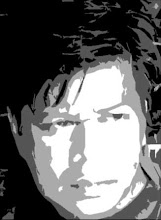

 Posts
Posts

