 Download Music!: Keith Jareet-Body And Soul; Keith Jarrett-My Song; Keith Jarrett-For Yawuh
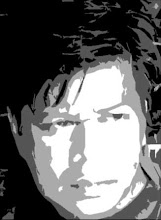
Keith Jarrett (born May 8, 1945 in Allentown, Pennsylvania) is an American pianist, composer and jazz icon.
In 2003 he received the Polar Music Prize, being the first (and to this day only) recipient not sharing the prize with anyone else.
Early years
Jarrett grew up in suburban Allentown, Pennsylvania with a significant exposure to music. He displayed prodigious talents as a young child and possessed absolute pitch or perfect pitch. He played his first formal public concert to paying customers at the age of six and it ended with two of his own compositions. He took intensive classical lessons, and particularly enjoyed playing compositions by Bartok. In his teens, as a student at Emmaus High School, he learned jazz and quickly became proficient in it. At one point, he had an offer to study composition with the legendary Nadia Boulanger in Paris; this was amiably turned down by Jarrett and his mother. In his early teens, he developed a stronger interest in the contemporary jazz scene: he recalls a Dave Brubeck show as an early inspiration.
Following his graduation from Emmaus High School in 1963, Jarrett moved from Allentown to Boston, Massachusetts, where he attended the Berklee College of Music and played cocktail piano. Jarrett then moved to New York City, where he played at the renowned Village Vanguard club.
In New York, Art Blakey hired him to play with his Jazz Messengers band, and he subsequently became a member of the Charles Lloyd Quartet (a group which included Jack DeJohnette, a frequent musical partner throughout Jarrett's career). The Lloyd quartet's 1966 album Forest Flower was one of the most successful jazz recordings of the late 1960s. Jarrett also started to record as a leader at this time, in a trio with Charlie Haden and Paul Motian. Jarrett's first album as a leader, Life Between The Exit Signs (1967), appeared around this time on the Vortex label, to be followed by Restoration Ruin (1968), which is easily the most bizarre entry in the Jarrett catalog. Not only does Jarrett barely touch the piano, he plays all the other instruments on what is essentially a folk-rock album, and even does all the singing. Another trio album with Haden and Motian followed later in 1968, this one recorded live for the Atlantic label and called Somewhere Before.
 Miles Davis
Officially released Miles Davis recordings on which Jarrett appeared:
At Fillmore (double LP issued in 1971, recorded June 1970, taken from four consecutive nights at the Fillmore East).
Live-Evil (1970).
Get Up With It (1974).
Directions (1980) (a release of previously unavailable recordings).
The Columbia Years: 1955-1985 (1990) (mainly a collection of previously issued recordings; includes some of the above cited Jack Johnson outtakes).
Miles Electric: A Different Kind of Blue (2004) (a 1970 performance at the Isle of Wight festival, released on DVD in 2004).
The Cellar Door Sessions (2005) (complete recordings of live sessions that produced the live segments of Live-Evil).
1970s quartets
From 1971 to 1976, Jarrett added saxophonist Dewey Redman to the existing trio with Haden and Motian. The "American Quartet" was often supplemented by an extra percussionist, such as Danny Johnson, Guilherme Franco, or Airto Moreira, and occasionally by guitarist Sam Brown. The members would also play a variety of instruments, with Jarrett often being heard on soprano saxophone and percussion as well as piano, Redman on musette, a Chinese double-reed instrument, and Motian and Haden on a variety of percussion. Haden also produces a variety of unusual plucked and percussive sounds with his acoustic bass, even running it through a wah-wah pedal for one track ("Mortgage On My Soul," on the album Birth). The group recorded for Atlantic Records, Columbia Records, Impulse! Records and ECM.
The group's recordings include:
Birth, El Juicio (The Judgement) and The Mourning of a Star (all 1971), recorded at the same sessions, though Redman does not appear on the latter; these albums were issued by Atlantic Records
Expectations (1972), Jarrett's only album for Columbia, an ambitious, wide-ranging session that included rock-influenced guitar by Sam Brown as well as string and brass arrangements, and for which his contract with Columbia was immediately terminated
Fort Yawuh (1973), recorded live at the Village Vanguard in New York City; his first album on Impulse! Records
Backhand (1974)
Treasure Island (1974)
Death and the Flower (1974)
Shades (1975)
Mysteries (1975)
The Survivors' Suite (1976)
Eyes of the Heart (1976), a live recording originally released as a three-sided LP by ECM, with the fourth side containing blank grooves.
Byablue (1976)
Bop-Be (1977)
 The last two albums, both recorded for Impulse!, primarily feature the compositions of the other band members, as opposed to Jarrett's own which dominate the previous albums.
Jarrett's compositions and the strong musical identities of the group members gave this group a very distinctive sound. The group's music was an interesting and exciting amalgam of free jazz, straight-ahead post-bop, gospel music, and exotic Middle-Eastern-sounding improvisations.
In the mid and late 1970s Jarrett led a "European Quartet" concurrently with the above discussed "American Quartet", which was recorded by ECM. This combo consisted of saxophonist Jan Garbarek, bassist Palle Danielsson, and drummer Jon Christensen.
Albums recorded by this group include:
Belonging (1974)
My Song (1978)
Personal Mountains (1979, live in Tokyo, released a decade later)
Nude Ants (1979, live at the Village Vanguard in New York)
This ensemble played music in a similar style to that of the American Quartet, but with many of the avant-garde and "Americana" elements replaced by the European folk influences that characterized ECM artists of the time.
Following the release of the album Gaucho by the US jazz/rock band Steely Dan in 1980, Jarrett became involved in a legal wrangle over the title track. Arguably intended as a tribute to Jarrett, the song was credited only to Donald Fagen and Walter Becker, despite its undeniable resemblance to the Jarrett composition "Long As You Know You're Living Yours," from the "Belonging" album. Jarrett threatened legal action, and Becker and Fagen were then forced to add his name to the credits and to include him in future royalties.
Solo piano
Jarrett's first album for ECM, called Facing You (1971) was a solo piano date recorded in the studio. He has continued to record solo piano albums in the studio intermittently throughout his career, including Staircase (1976), The Moth and the Flame (1981), and The Melody At Night, With You (1999). Book of Ways (1986) is a studio recording of clavichord solos.
The studio albums are modestly successful entries in the Jarrett catalog, but in 1973, Jarrett also began playing totally improvised solo concerts, and it is the voluminous recordings of these concerts that have made him one of the best-selling jazz artists in history. Albums recorded at these concerts include:
Solo Concerts: Bremen/Lausanne (1973). Recorded in Bremen and Lausanne these concerts were originally released as a three-LP set
The Köln Concert (1975), one of the best-selling jazz albums of all time
Sun Bear Concerts (1976), five complete Japanese concert recordings, originally released as a ten-LP set
 Concerts (Bregenz/München) (1981), originally released as a three-LP set, only the Bregenz concert is included on the single CD release. The München concert (more than an hour and a half long) has not yet been reissued on CD, apart from a ten minute section on the :rarum collection which was compiled by Jarrett himself. According to the ECM website however, a reissue is in the works.
Dark Intervals (1988) recorded in Japan, it is the first of Jarrett's live solo albums to feature shorter, more concise improvised pieces rather than the more familiar extended improvisations of his earlier solo albums.
Paris Concert (1990) featuring a 38 minute improvisation, a composition (The Wind) and a blues.
Vienna Concert (1991), which Jarrett has stated is his finest solo concert recording
La Scala (1997), which was the first ever non classical concert in Milan's La Scala Opera House
Radiance (2005)
The Carnegie Hall Concert (2006)
Jarrett has commented that his best performances were during the times where he had the least amount of preconception of what he was going to play at the next moment. An apocryphal account of one such performance had Jarrett staring at the piano for several minutes without playing; as the audience grew increasingly uncomfortable, one member shouted to Jarrett, "D sharp!", to which the pianist responded, "Thank you!," and launched into an improvisation at speed.
Jarrett's 100th solo performance in Japan was captured on DVD at Suntory Hall Tokyo on April 14th 1987 and released the same year. The DVD was titled Solo Tribute.
A DVD entitled Last Solo was released in 1987 from a live solo concert at Kan-i Hoken hall, Tokyo recorded in Januuary 25th 1984.
Another of his solo concerts, Dark Intervals (1987, Tokyo), has less of a freeform improvisation feel to it due to the brevity of the pieces. Sounding more like a set of short compositions, these pieces are nonetheless entirely improvised. In addition to the shorter form, they lack the 'jazzy' feel associated with the above concerts.
In the late 1990s, Jarrett was diagnosed with chronic fatigue syndrome (CFS) and was confined to his home for long periods of time. It was during this period that he recorded The Melody at Night, With You, a solo piano record consisting of jazz standards presented with very little of the reinterpretation in which he usually engages. The album had originally been a Christmas Day gift to his second wife, Rose Anne.
By 2000, he had returned to touring, both solo and with the Standards Trio. Two 2002 solo concerts in Japan, Jarrett's first solo piano concerts following his illness, were released on the 2005 CD Radiance (a complete concert in Osaka, and excerpts from one in Tokyo), and the 2006 DVD Tokyo Solo (the entire Tokyo performance). In contrast with previous concerts (which were generally a pair of 30-40 minute continuous improvisations), the 2002 concerts consist of a linked series of shorter improvisations (some as short as a minute and a half, a few of fifteen or twenty minutes).
In September 2005 at Carnegie Hall Jarrett performed his first solo concert in North America in more than ten years, released a year later as a double CD set (The Carnegie Hall Concert).
In December 2008 he performed solo in the Royal Festival Hall, playing solo in London for the first time in seventeen years.
In January 2009 he again performed solo at Carnegie Hall in New York. The concert was recorded for possible future CD release.
 The Standards Trio
The trio has recorded numerous live and studio albums consisting primarily of jazz repertory material. They each list Ahmad Jamal as a major influence in their musical development for both his use of melodical and multi-tonal lines. They are:
Standards, Vol. 1 (January 1983; studio recording)
Standards, Vol. 2 (January 1983; studio recording)
Changes (January 1983; studio recording)
Standards Live (July 1985; live recording)
Still Live (July 1986; live recording)
Changeless (October 1987; live recording), a record of free improvisation
Standards in Norway (October 1989; live recording)
Tribute (October 1989; live recording), which consists of songs played in tribute to various jazz figures associated with them
The Cure (April 1990; live recording)
Bye Bye Blackbird (October 1991; studio recording), a tribute to the recently deceased Miles Davis
At the Deer Head Inn (1992; live recording)
At the Blue Note (June 1994; live recording), a six-disc boxed set that documents three nights (six sets) in the famous New York City nightclub
Tokyo '96 (March 1996; live recording)
Whisper Not — Live in Paris 1999 (July 1999; live recording)
Inside Out (July 2000; live recording), a record of free improvisation
Always Let Me Go (April 2001; live recording), a double album of free improvisation
The Out-of-Towners (July 2001; live recording)
Up for It - Live in Juan-les-Pins, July 2002 (July 2002; live recording)
My Foolish Heart - Live at Montreux (July 2001; a double album of a live recording, Montreux Jazz Festival 2001)
Setting Standards - New York Sessions (2008; 3CD set of the first three albums by the trio: Standards1, Standards2, Changes from 1983)
Yesterdays (2009)
The trio has also released videos of performances in Japan, which are available on DVD, including:
Standards (February 1985; live recording)
Standards II (October 1986; live recording)
Live at Open Theater East (July 1993; live recording)
Tokyo 1996 (March 1996; live recording), a video document of the same concert which was released on CD as Tokyo '96
 The Jarrett/Peacock/DeJohnette trio has also produced recordings that consist largely of challenging original material, most notably 1987's Changeless. (These recordings are noted above.) Several of the standards albums contain an original track or two, some attributed to Jarrett but mostly group improvisations. The live recordings Inside Out and Always Let Me Go (both released in 2001) marked a renewed interest by the trio in wholly improvised free jazz. By this point in their history, the musical communication among these three men had become all but telepathic, and their group improvisations frequently take on a complexity that sounds almost composed. The Standards Trio undertakes frequent world tours of recital halls (the only venues in which Jarrett, a notorious stickler for acoustic sound, will play these days) and is one of the few truly lucrative jazz groups to play both "straight-ahead" (as opposed to smooth) and free jazz.
A related recording, At the Deer Head Inn (1992), is a live album of standards recorded with Paul Motian replacing DeJohnette, at the venue in Jarrett's hometown where he had his first employment as a jazz pianist. It was the first time Jarrett and Motian had played together since the demise of the American quartet sixteen years earlier, and also reunited the drummer and bassist who had backed Bill Evans on his album Trio 64 (1963).
Classical music
Since the early 1970s, Jarrett's success as a jazz musician has enabled him to maintain a parallel career as a classical composer and pianist, recording almost exclusively for ECM Records.
1973's In The Light album consists of short pieces for solo piano, strings, and various chamber ensembles, including a string quartet, a brass quintet, and a piece for cellos and trombones. This collection demonstrates a young composer's affinity for a variety of classical styles, with varying degrees of success.
Luminessence (1974) and Arbour Zena (1975) both combine composed pieces for strings with improvising jazz musicians, including Jan Garbarek and Charlie Haden. The strings here have a moody, contemplative feel that is characteristic of the "ECM sound" of the 1970s, and is also particularly well-suited to Garbarek's keening saxophone improvisations. From an academic standpoint, these compositions are dismissed by many classical music aficionados as lightweight, but Jarrett appeared to be working more towards a synthesis between composed and improvised music at this time, rather than the production of formal classical works. From this point on, however, his classical work would adhere to more conventional disciplines.
Ritual (1977) is a composed solo piano piece recorded by Dennis Russell Davies that is somewhat reminiscent of Jarrett's own solo piano recordings.
The Celestial Hawk (1980) is a piece for orchestra, percussion, and piano that Jarrett performed and recorded with the Syracuse Symphony under Christopher Keene. This piece is the largest and longest of Jarrett's efforts as a classical composer.
Bridge of Light (1993) is the last recording of classical compositions to appear under Jarrett's name. The album contains three pieces written for a soloist with orchestra, and one for violin and piano. The pieces date from 1984 and 1990.
 In 1988 New World Records released the CD Lou Harrison Piano Concerto & Suite for Violin, Piano and small orchestra, featuring Jarrett on piano with Naoto Otomo conducting the piano concerto with the New Japan Philharmonic. Robert Hughes conducted the Suite for Violin, Piano and Small Orchestra. 1992 also saw the release of Jarrett's performance of Peggy Granville-Hicks Etruscan Concerto with Dennis Russell Davies conducting The Brooklyn Philharmonic Orchestra. This was released on Music Masters Classics with pieces by Lou Harrison and Terry Riley. In 1995 the record label Music Masters Jazz released a CD on which one track featured Jarrett performing the exquisite solo piano part in Lousadzak, a 17-minute piano concerto by American composer Alan Hovhaness. The conductor was Dennis Russell Davies. Most of Jarrett's classical recordings are of older repertoire, but Jarrett may have been introduced to this modern work by his one-time manager George Avakian, who was a friend of the composer.
Arvo Pärt, Fratres on Tabula Rasa with Gidon Kremer (1984)
Johann Sebastian Bach, Das wohltemperierte Klavier, Book 1 (1987)
Johann Sebastian Bach, Goldberg Variations (1989)
Johann Sebastian Bach, Das wohltemperierte Klavier, Book 2 (1990)
Georg Friedrich Händel, Six Sonatas for Recorder and Harpsichord with Michala Petri (1990)
Dmitri Shostakovich, 24 Preludes and Fugues (1991)
Johann Sebastian Bach, 3 Sonaten für Viola da Gamba und Cembalo (1991)
Johann Sebastian Bach, The French Suites (1991)
Georg Friedrich Händel, Suites for Keyboard (1995)
Wolfgang Amadeus Mozart, Piano Concertos, Masonic Funeral Music and Symphony in G Minor (1994)
Wolfgang Amadeus Mozart, Piano Concertos and Adagio and Fugue (1996)
In 2004, Jarrett was awarded the Léonie Sonning Music Prize. The prestigious award usually associated with classical musicians and composers has only previously been given to one other jazz musician — Miles Davis. The first person to receive the award was Igor Stravinsky in 1959.
Other works
Jarrett also plays harpsichord, clavichord, organ, soprano saxophone, drums and many other instruments. He often played saxophone and various forms of percussion in the American quartet, though his recordings since the breakup of that group have rarely featured other instruments. In the last twenty years, the majority of his recordings have been on the acoustic piano only. He has spoken with some regret of his decision to give up playing the saxophone, in particular. Some of Jarrett's other albums, many of which contain examples of his instrumental diversity are:
Gary Burton & Keith Jarrett (1971), Burton receives top billing at this early date, but all of the compositions except one are Jarrett's. Jarrett plays some electric piano.
Hymns/Spheres (1976), improvisations recorded on an 18th century pipe organ of the Ottobeuren Abbey, a Benedictine abbey in Germany.
Invocations/The Moth and the Flame (1981), partially recorded on the same organ as Hymns/Spheres and also featuring Jarrett improvising on saxophone in the extraordinarily resonant abbey.
Spirits (1986), a collection of "back to basics" multitracked home recordings, performed mainly on a variety of wind instruments
Spheres (1986), Shortened, one-disc re-release of Hymns/Spheres.
 There are several compilations and collections covering various aspects of Jarrett's career:
The Impulse Years, 1973-1974, the albums Fort Yawuh, Treasure Island, Death and the Flower and Backhand, with outtakes
Mysteries: The Impulse Years, 1975-1976, the albums Shades, Mysteries, Byablue and Bop-Be, with outtakes
Silence (1977), a CD reissue of the Byablue and Bop-Be albums, with three tracks omitted to fit on a single CD
Works, an ECM compilation, covering the years 1972-1981.
:rarum, a two-CD ECM compilation, chosen by Jarrett himself, and intended to highlight aspects of his ECM catalogue (Spirits, Book of Ways, the organ improvisations) which he felt had been neglected, as well as the more well-known work with the European quartet, the standards trio, and solo.
After leaving Miles Davis, Jarrett did not often work as a sideman, but he did appear on a few other musician's albums, including the following:
Paul Motian: Conception Vessel (1972)
Airto: Free (1972)
Freddie Hubbard: Sky Dive (1972)
Kenny Wheeler: Gnu High (1975)
Charlie Haden: Closeness (1976)
Scott Jarrett: Without Rhyme or Reason
On April 15, 1978, Jarrett was the musical guest on Saturday Night Live. His music also has been featured on many television shows, including The Sopranos on HBO.
Idiosyncrasies
One of Jarrett's trademarks is his frequent, highly audible vocalization (grunting, groaning, and tuneless singing), similar to that of Glenn Gould, Thelonious Monk, Erroll Garner, and Oscar Peterson. Jarrett is also physically active while playing, writhing, gyrating, and almost dancing on the piano bench. These behaviors occur in his jazz and improvised solo performances, but are for the most part absent whenever he plays classical repertory. Jarrett has noted his vocalizations are based on involvement, not content, and are more of an interaction than a reaction.
Jarrett is notoriously intolerant of audience noise, including coughing and other involuntary sounds, especially during solo improvised performances. He feels that extraneous noise affects his musical inspiration. As a result, cough drops are routinely supplied to Jarrett's audiences in cold weather, and he has even been known to stop playing and lead the crowd in a "group cough." This intolerance was made clear during a concert on October 31, 2006, at the restored Salle Pleyel in Paris. After making an impassioned plea to the audience to stop coughing, Jarrett walked out of the concert during the first half, refusing at first to continue, although he did subsequently return to the stage to finish the first half, and also the second. A further solo concert three days later went undisturbed, following an official announcement beforehand urging the audience to minimize extraneous noise. In 2008, during the first half of another Paris concert, Jarrett complained to the audience about the quality of the piano which he had been given, walking off between solos and remonstrating with staff at the venue. Following an extended interval, the piano was replaced. In 2007, in concert in Perugia, angered by photographers, Jarrett implored the audience: 'I do not speak Italian, so someone who speaks English, can tell all these assholes with cameras to turn them fucking off right now. Right now! No more photographs, including that red light right there. If we see any more lights, I reserve the right (and I think the privilege is yours to hear us), but I reserve the right and Jack and Gary reserve the right to stop playing and leave the goddamn city'. This caused the organizers of Umbria Jazz Festival to declare that they will never invite him again.
Jarrett is also extremely protective over the quality of recordings of his concerts. In 1992, a trio concert at the Royal Festival Hall in London was temporarily stopped as he thought he had identified someone in the audience with a recording device. It turned out to be a light on the mixing desk and the concert resumed after an apology.
Jarrett has been known for many years to be strongly opposed to electronic instruments and equipment. His liner notes for the 1973 album Solo Concerts: Bremen / Lausanne states: "I am, and have been, carrying on an anti-electric-music crusade of which this is an exhibit for the prosecution. Electricity goes through all of us and is not to be relegated to wires." He has largely eschewed electric or electronic instruments since his time with Miles Davis.
Jarrett has been known to write back disdainful letters to critics who have negatively reviewed his music.

For many years he has been a follower of the teachings of metaphysician and mystic G. I. Gurdjieff. In 1980 he recorded an album of Gurdjieff's compositions, called Sacred Hymns of G. I. Gurdjieff, for ECM.
Personal
Jarrett's younger brother, Chris Jarrett, is also a pianist and his other brother Scott Jarrett is a producer/songwriter.
---------------
Biography
Born: May 8, 1945
Over the past 40 years, Keith Jarrett has come to be recognized as one of the most creative musicians of our times - universally acclaimed as an improviser of unsurpassed genius; a master of jazz piano; a classical keyboardist of great depth; and as a composer who has written hundreds of pieces for his various jazz groups, plus extended works for orchestra, soloist, and chamber ensemble.
Born May 8, 1945 in Allentown, Pennsylvania, Keith Jarrett began playing the piano at age 3 and undertook classical music studies throughout his youth; performing as a child in programs at the Academy of Music in Philadelphia and at Madison Square Garden. He undertook formal composition studies at age 15, before moving to Boston to briefly study at the Berklee College of Music. While still in his late teens, arrangements were made to study composition in Paris with the great pedagogue Nadia Boulanger, but then canceled at the last moment in favor of moving to New York in 1964 to play jazz.
After a tentative period sitting in at the Village Vanguard and other New York jazz spots, Jarrett toured first with Art Blakey's Jazz Messengers. From 1966 to 1968 he was the pianist with the Charles Lloyd Quartet which quickly became one of the most popular groups on the changing late-Sixties jazz scene with best-selling records and worldwide tours. He soon led his own trio with Charlie Haden and Paul Motian (which in 1972 expanded to a quartet with the addition of tenor saxophonist Dewey Redman). Then in 1970/71, Jarrett became a featured member in Miles Davis' electric fusion group, playing electric piano and organ - his last stint as a sideman, thereafter, dedicating himself exclusively to performing acoustic music as a solo artist and as a leader.
In 1971, Keith Jarrett began his recording collaboration with German producer Manfred Eicher and ECM Records (Editions of Contemporary Music). This fruitful collaboration has produced over 60 recordings to date, unparalleled in their scope, diversity, and quality.
The foundation of the Jarrett/ECM discography is made up of the landmark solo piano recordings which have helped redefine the role of the piano in contemporary music. The piano improvisations on Facing You, Solo Concerts, The Köln Concert, Staircase, Sun Bear Concerts, Moth and The Flame, Concerts, Paris Concert, Dark Intervals, Vienna Concert, and La Scala incorporate a broad spectrum of musical idioms and languages - classical, jazz, ethnic, gospel, folk, blues and pure sound - revealing a creative process based on a deeply conscious state of awakeness and listening in the moment, producing music both deeply personal, yet universal. This body of solo piano work is without precedent with the Köln Concert being the best selling piano recording in history.
In May 2005, ECM released Radiance, a new 2-CD set of solo piano improvisations recorded live in Japan in November 2002.
On September 26, 2005 Keith Jarrett performed his first American solo concert in nearly a decade at New York’s Carnegie Hall. The sold out concert which featured five encores including solo versions of his popular compositions My Song and Paint My Heart Red was recorded and is being prepared for CD release by ECM in September 2006.
In 1999, The Melody At Night, With You, a solo piano studio recording of classic melodies was released by ECM and has become one of the best selling instrumental recordings by a jazz artist in the past decade, winning many “Best of the Year” awards in Europe, Japan and the US.
For the past two decades, Keith Jarrett's main context for playing jazz has been his trio with bassist Gary Peacock and drummer Jack DeJohnette, which in 2003 celebrates its 20th Anniversary together. The trio first played together in 1977, when Jarrett and DeJohnette played on Peacock's first ECM Records recording, Tales of Another (Jarrett and DeJohnette had already played together in the late-'60's with both Charles Lloyd and Miles Davis). In 1983, Jarrett invited the other two to make playing “standards” - the rich body of American Broadway show and jazz tunes from the 1930's, '40s and '50s. At the time it was considered passé for top players to concentrate on “standards”, instead of original material, but Jarrett thought it was important to show that: “Music wasn't about the material, but what the player brings to the material.”
 The original 1983 trio session in New York produced the trio's first three ECM releases: Standards Vol. 1 and Vol. 2, and Changes. Thirteen “live” concert recordings have followed on ECM, each recorded in a different international city: Standards Live (Paris 1985), Still Live (Munich 1986), Changeless (US Tour 1987), Tribute (Cologne 1989), Standards in Norway (Oslo 1989), The Cure (New York/Town Hall 1990), Live at The Blue Note (New York 1994), Tokyo '96 (Tokyo, 1996), Whisper Not (Paris 1999), and the releases, Inside Out (London, 2000) and Always Let Me Go (Tokyo, 2001), both recordings of freely improvised trio music recorded live in concert.
In 2003, in celebration of their 20-year collaboration, ECM released Up For It - a live recording capturing the trio's 2002 performance at the Festival de Jazz D'Antibes/Juan-Les-Pins (France). The latest trio release is The Out-of-Towners, a live concert recording taken from the trio’s July 2001 concert at Munich’s State Opera House which was nominated for a Grammy in 2004 and was recently awarded the Deutsche Schallplattenpreis in Germany
The 1995 ECM release, Keith Jarrett At The Blue Note: The Complete Recordings, is a special 6-CD box set that captures the trio's complete, sold out engagement at the Blue Note jazz club in New York in June 1994. Featuring nearly 40 standards, Jarrett originals, plus extended trio improvisations, the CD box set was voted “Album of the Year” in the 1996 Downbeat Critics Poll.
In 1991, two weeks after the death of Miles Davis, the trio returned to the studio for the first time in 8 years to record Bye Bye Blackbird, their deeply felt tribute to the jazz giant that all three had played with in their early years.
Another Jarrett trio release on ECM is At The Deer Head Inn, a recording that captures him playing a one-time-only gig with his old friends Paul Motian and Gary Peacock at The Deer Head Inn, a venerable 14O-year old inn in the Pocono Mountains in Eastern Pennsylvania with a 60-year history of presenting jazz, where Jarrett played his first professional jazz gig as a leader at age 16.
There are also 4 ECM releases by BELONGING, Jarrett's acclaimed late-1970's Scandinavian quartet featuring Jan Garbarek (saxophone), Palle Danielsson (bass) and Jon Christensen (drums). Several of the quartet's recordings which include Belonging, My Song, Nude Ants, and Personal Mountains became bestsellers, influencing a whole generation of young players in Europe and the US.
Other early Jarrett jazz recordings include more than a dozen recordings by his original quartet with Charlie Haden, Paul Motian, and Dewey Redman for Atlantic, Columbia, Impulse Records and ECM - The Mourning of a Star, Birth, El Juicio, Expectations, Fort Yawuh, Treasure Island, Death and the Flower, Back Hand, Mysteries, Shades, The Survivor's Suite, and Eyes of the Heart - many of which won “Best of the Year” awards from international music press.
Impulse/GRP Records has released two multi-CD sets, The Keith Jarrett: Impulse Years, 1973-1974 (5-CD set) and Mysteries: The Impulse Years 1975-76 (4-CD set) that include the complete Impulse recordings of his American quartet with Haden, Redman and Motian. The two volumes document in depth the main body of recorded work of one of the period's finest acoustic jazz groups, featuring all the music on the eight original Impulse LPs, plus more than two hours of previously unreleased alternate takes from the original Impulse sessions.
Rhino/Atlantic Records has released a 2-CD retrospective box set, Foundations, that documents the early years in Jarrett's recording history from 1966-1974 with selected tracks from the early Atlantic sessions with the American trio/quartet, plus Jarrett's first recordings as a sideman with Art Blakey and Charles Lloyd, and studio sessions with Jim Pepper/Bob Moses (previously unreleased), Gary Burton and Airto.
 For Jarrett, one of his most important recordings is Spirits, a deeply personal and primal work of musical communion on which he alone plays all the instruments - recorders, Pakistani wooden flute, tabla, various percussion instruments, guitar, saxophone, piano, and chant - guided more by intuition, than by technical conditioning. The haunting music, reminiscent of both ethnic and medieval music, was recorded simply by Jarrett at his home in 1985 with no engineer or other people present using only two cassette tape recorders and two microphones with each instrument being added layer by layer. He considers this music to be vertical communion (from the earth up), rather than horizontal communication. Spirits joins Hymns/Spheres (organ), Book of Ways (clavichord), and Vienna Concert (piano) on Jarrett's personal short list of his most essential recordings. Each of these varied musical invocations exemplifies the pure essence of true improvisation.
Other Jarrett/ECM releases include Sacred Hymns, a recording of mystic philosopher G.I. Gurdjieff's sacred piano music as transcribed by Thomas DeHartmann a performance of Arvo Pärt's “Fratres” with violinist Gidon Kremer on the Pärt release Tabula Rasa. There are several recordings of Jarrett orchestral/chamber music compositions - In The Light, Arbour Zena and Luminessence (both featuring saxophonist Jan Garbarek), Celestial Hawk (with the late Christopher Keene and Syracuse Symphony); and Bridge of Light which features Jarrett's chamber orchestral compositions, Elegy for Violin and String Orchestra, Adagio for Oboe and Strings, Bridge of Light for Viola and Orchestra as performed by The Fairfield Orchestra under the direction of Thomas Crawford (conductor) with soloists Michelle Makarski (violin), Patricia McCarty (viola), and Marcia Butler (oboe); plus the Jarrett Sonata for Violin and Piano with Ms. Makarski (violin) and Mr. Jarrett (piano). The scores and parts for these four compositions are currently available through Schott Music International.
Classical music releases by Keith Jarrett on ECM include the J.S. Back keyboard works: Well-Tempered Clavier Book I (piano) and Book II (harpsichord), Goldberg Variations (harpsichord), French Suites (harpsichord), and Sonatas for Viola Da Gamba and Cembalo with Kim Kashkashian (viola) and Jarrett (harpsichord).; plus the Shostakovich 24 Preludes and Fugues, Op. 87; and a piano recording of selected Handel Keyboard Suites. And there are two ECM volumes of Jarrett performing selected Mozart Piano Concertos with the Stuttgart Kammerorchester under the direction of Dennis Russell Davies.
BMG/RCA Records has released two CD's with Jarrett (harpsichord) accompanying Michala Petri, the Danish recorder virtuoso, performing the Handel Sonatas for Recorder and Harpsichord, and the J.S. Bach Sonatas for Flute and Harpsichord.
Other Jarrett recordings of contemporary piano literature include on New World Records, the Lou Harrison Piano Concerto (composed for Jarrett) and Harrison's Suite for Violin, Piano and Orchestra (Lucy Stoltzman, violin); and on MusicMasters Records, Alan Hovaness's Lousadvak for Piano and Orchestra with the American Composers Orchestra and Dennis Russell Davies (conductor) and the Etruscan Concerto by Australian composer Peggy Glanville-Hicks with the Brooklyn Philharmonic with Mr. Davies conducting.
Keith Jarrett has performed baroque, classical and contemporary keyboard music at many of the major international music centers including works by Barber, Bartók, Peggy Glanville-Hicks, Lou Harrison, Alan Hovhaness, Colin McPhee, Mozart and Stravinsky performed with the symphony orchestras of Boston, San Francisco, Philadelphia, Detroit, Atlanta, Brooklyn, Rochester, as well as the American Composers Orchestra, Beethovenhalle Orchestra Bonn, Handel and Haydn Society (Boston), the St. Paul and English Chamber orchestras with conductors John Adams, Vladimir Ashkenazy, Dennis Russell Davies, John Eliot Gardiner, Christopher Hogwood, Christopher Keene, Jeffrey Tate, and Hugh Wolff.
Recitals of works by J.S. & C.P.E. Bach, Bartók, Beethoven, Handel, Hindemith, Mozart, Purcell, Scarlatti, and Shostakovich have been performed at Lincoln Center, The Kennedy Center, Beethovenhaus (Bonn), Franz Liszt Academy of Music (Budapest), and in San Francisco, Boston, Minneapolis, Toronto, and Stockholm.

Numerous Jarrett compositions received their premieres at major music centers. Celestial Hawk for Orchestra, Percussion, and Piano premiered in 1980 with Christopher Keene and the Syracuse Symphony at Carnegie Hall and in Syracuse. Adagio for Oboe and String Orchestra premiered in 1984 with the Pasadena Chamber Orchestra and Elegy for Violin and String Orchestra premiered in 1985 in Tokyo. Elegy had its American premiere in 1986 with Dennis Russell Davies and the Philadelphia Orchestra. Sacred Ground for Piano, Flute, Cello, and Clarinet was commissioned by the Chamber Music Society of Lincoln Center and had its premiere in 1985 with Mr. Jarrett joined by Paula Robison, Fred Sherry and Richard Stoltzman. Woodwind Quintet premiered in 1989 with the Dorian Wind Quintet. Bridge of Light for Viola and Orchestra premiered in 1991 with violist Patricia McCarty and The Fairfield Orchestra with Thomas Crawford. In 1987, Chamber Music Chicago dedicated an evening at Orchestra Hall to Keith Jarrett as composer with the world premiere of four Jarrett chamber music works: Rem(a)inders for Piano, Clarinet, Flute, Cello, and Violin ; Terra Cotta for Clarinet and Tuned Drums ; Suite for Solo Violin; and Sonata for Flute and Piano. In March 1992, the Lincoln Center Great Performers Series hosted an evening dedicated to Keith Jarrett's orchestral works with performances of Bridge of Light, Elegy, Adagio for Oboe, plus Sonata for Violin and Piano.
Two books about Keith Jarrett have been published. Keith Jarrett: Inner Views written by Kunihiko Yamashita, former editor of JazzLife (Japan), has been published in Japan and Italy. Keith Jarrett: A Man and His Music, a biography written by the acclaimed British jazz trumpeter and critic Ian Carr, has been published in Britain by Grafton Books and in the US by Da Capo Books.
As an essayist, Mr. Jarrett has been invited to contribute critical essays to the New York Times, Musician and Downbeat magazines. He has also written forwards to The Piano Book, by Larry Fine on Brookside Press (US) and The Complete Guide to High-End Audio by Robert Harley on Accapella Publishing (US) and a preface for the American edition of Geoff Dyer's But Beautiful (North Point Press), an evocative work on jazz.
Seven Keith Jarrett concert videos have been filmed in Tokyo and released worldwide on DVD. Last Solo documents Jarrett's last solo concert before taking a 4-year hiatus (1983-87) from all solo work. Standards I and Standards II feature the trio in concert in Tokyo in 1985 and 1986. Solo Tribute captures a rare solo piano concert in 1987 with Jarrett performing a complete evening of solo “standards”, rather than with his trio. The Keith Jarrett Trio: Live at The Open Air Theatre East and Keith Jarrett/Gary Peacock/Jack DeJohnette Tokyo '96 capture the trio's 1993 and 1996 Tokyo performances. In May 2006 ECM released its first DVD, Keith Jarrett: Tokyo Solo, a complete concert video filmed in November 2002.
In May 2005 on the occasion of his 60th Birthday, a full length 90-minute documentary film entitled Keith Jarrett: The Art of Improvisation was released worldwide on DVD (Euro Arts). The film, directed by British documentary film maker Mike Dibb in collaboration with Keith Jarrett biographer Ian Carr, explores in depth Keith Jarrett’s music and work over the past 40 years.
Keith Jarrett's many honors include a Guggenheim Fellowship, Prix du President de la Republique and Grand Prix du Disque awards from the Academie Charles Cros (France), seven Deutscher Schallplattenpries (Germany), and eight Grammy (US) nominations in both the jazz and classical categories. He has received dozens of “Artist” or “Album of the Year” awards from the New York Times, New Yorker, Time, Stereo Review, Downbeat, Billboard, CD Review, and Rolling Stone; including Best Classical Keyboardist in Keyboard Magazine Reader's Polls (1991, '93), Best Classical CD in CD Review Editor's Poll (1992) for the Shostakovich 24 Preludes and Fuques, Op. 87; and dozens of “Critic's” and “Best of The Year” awards” from the international music press. The Melody At Night, With You (1999) , Whisper Not (2000), and Up For It (2003) all received Swing Journal's Gold Disc Award for “Best Album of the Year” in Japan, as well as the Choc des Chocs Award from Jazzman Magazine (France).
In the annual Downbeat Magazine polls, Keith Jarrett has garnered multiple awards for “Pianist of The Year” in the Critics Poll (1996, and ‘01 to ‘05 consecutively ) and Readers Poll (1994, '96/97, and '99/'05 consecutively), “Best Acoustic Group” in the Readers Poll (1998/99 and 2004)), and “Album of The Year” in the Critics Poll (1996) for the Live At The Blue Note.
In 1989, Jarrett was named “Officier de L'Ordre des Arts et des Lettres”, one of the highest honors the French Ministry of Culture can bestow on an artist. In 1996, he was elected a member of the Royal Swedish Academy of Music, joining Duke Ellington as only the second foreign jazz artist to ever be so honored. In 2002, he was elected to be Fellow of the American Academy of Arts and Sciences, the America's oldest honorary society founded in 1780.

In 2003 Keith Jarrett was awarded the 2003 Polar Music Prize,, one of the world's most prestigious music awards, presented by the King of Sweden in a special televised ceremony in Stockholm. Then July 2004, he was presented the Leonie Sonning Prize in Copenhagen, another of the world’s major music awards. He is only the second jazz artist to receive the Sonning Prize since it’s founding in 1959, Miles Davis being the first in 1985. Also in July 2004, he was presented with the Miles Davis Prize by the 25th Anniversary of the Festival International de Jazz de Montreal.
Keith Jarrett was the first musician to ever perform improvised music at several of the world's most important music venues. In 1978 he performed at the Metropolitan Opera in New York; 1990 at the Musikverein in Vienna; 1991 at the Vienna State Opera (Staatsoper); and 1995 at La Scala in Milan.
In 2008 he was inducted into the prestigious Downbeat Hall of Fame by the Downbeat Magazine 73rd Annual Jazz Readers Poll.


 The following was extracted from an interview with Tal which was published in Guitar Magazine in December '81 and January '82. Tal was, at that time touring the UK with Red Norvo.
 "Then Red came through New York with his group and when Mundell (Lowe) left, he called me up and asked me if I wanted to go to the West Coast with him - his home was in Santa Monica. We played some dates and made our way out to California where, every afternoon, we would go over to Red's house and rehearse. He had some arrangements - things like The Man I Love and I Surrender Dear - that he had done when he was featured with Woody's (Herman) band. We would play them as a ballad or maybe out of tempo for the first chorus and then go into a: bounce, or swing tempo, and he would take it up so fast that I couldn't keep with it; I would be playing half and quarter notes - it was really frustrating. I had to devise a way to keep up with him. There were certain phrases I could play sort of fast and I had to rely on those, even though I would repeat myself - I just had to play something. As I expanded them, I gradually got to keeping up with him. Nothing was written down - it wouldn't have helped me anyway as I can't sight-read. I can decipher it. Give me a part and I can work it out by a combination of looking at it and memorising. I've done that sometimes when I have been called to do a record date - by arranging to get the part a couple of days in advance.
 "I have relative, not perfect, pitch. Given one note, tell me what interval you want and I know right away where to put my finger. I think that is really important to improvising. I always think in intervals and not specific notes, although they may work out to be the same thing. As far as possible, I try to keep the chords of a progression in one position, while I think ahead. If I have to move, I get into the new position as quick as possible, even before the chord actually gets there, and all the time I'm thinking in the intervals of the key, instead of the chord. Of course, if it's a tune with a lot of chords and it is moving fast, you can't always stay in one position, then you have to shift about. An awful lot of progressions end in II-V-I or VI-II-V-I, so I'm using a related group in one position that saves a lot of awkward moving around. If you are familiar with where the notes of that sequence are, they will fall under the fingers in that position. I know I think of it, more or less, not just as one chord but as a moving thing that logically goes in that direction. That reduces it, instead of thinking bar by bar, or chord by chord, you think more in phrases. You're not thinking vertically all the time, but of the directions that the different lines are moving in. I think I sort of make a mental picture of it and, of course, you have to know the fingerboard thoroughly. When I move up to the high notes I try not to move across the string till I get to the first one and then have to go up the neck, but to move up in stages as I go along".
 There are a bunch of tunes that everybody knows, that you end up getting into for safety's sake, especially if you are on tour, going from town to town and working with different rhythm sections. Some of the young bass players haven't heard all the old tunes and don't always fit in. That is the nice part of having an organised group - you don't get these problems. But it's not practical, you can't move a group of any size around and make money, be cause the airlines and hotels cost too much now. When you work without drums, every aspect of the bass player's offering is magnified. For Red and me it should be a player who has a good attack, so that you can hear transient, that establishes right where the time is. Some of these players have a big sound; they sustain a note but it doesn't have a definite starting point, it's somewhere in there but you don't get the impact at the right spot."
 "Much of what I was listening to wasn't that complicated. Christian's compositions for the Goodman Sextet were mostly blues, with a bit of I Got Rhythm and Honeysuckle Rose thrown in. It was after hearing Coleman Hawkins and Art Tatum that new worlds opened up. As I became aware of the chord and interval possibilities, I realised there was much more to music than I ever thought.
 His performances on Norvo trio Savoy recordings recently reissued by Arista are harmonically venturesome and sometimes rhythmically complicated, but his playing never sounds unnatural. He often refers to the blues and to the back-country areas where he was reared. Like Red, he has a love for melody and it flows through his commentary. Even as he moves afield and abstracts an improvised sequence, the melody somehow lingers, simmering just below the surface.
 Jazz Masters 41 Tal Farlow (1995; Verve)



 Posts
Posts

