Coming to prominence in the late 1960s and early '70s with trumpeter Miles Davis and then with Mahavishnu Orchestra, Cobham is, in the words of critic Steve Huey, "generally acclaimed as fusion's greatest drummer, "and one of the best in the world" with an influential style that combines explosive power and exacting precision. Biography Early life and career Jazz fusion work --------------- Biography by Steve Huey William C. Cobham, born May 16, 1944 in Panama, is a Panamanian American jazz drummer, composer and bandleader.
Born in Panama, Cobham's family moved to New York City during his early childhood. A drummer from his youth, Cobham attended New York's High School of Music and Art, graduating in 1962.
He played in a U.S. Army Band from 1965 to 1968. Following his discharge, Cobham joined the group of pianist Horace Silver for about a year, also playing or recording with saxophonist Stanley Turrentine, organist Shirley Scott, and guitarist George Benson.
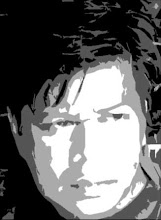
Billy Cobham in 1973
Cobham branched out to jazz fusion, which blended elements of jazz, rock and roll and funk, playing with the Brecker Brothers and guitarist John Abercrombie before recording and touring extensively with trumpeter Miles Davis. Cobham's work with Davis appears on Live-Evil and A Tribute to Jack Johnson, among other recordings. Cobham is also one of the first drummers to play open handed lead: a drummer that can lead (or ride) with either hand and begin or end a beat or fill with either hand (most drummers lead with 1 hand). He was also one of the first drummers to play with 3 or more snare and/or bass drums and multiple hi-hats.
The preface to his work with the Mahavishnu Orchestra was his work on guitarist John McLaughlin's album My Goal's Beyond.
In 1971, with fellow Davis alumnus McLaughlin , Cobham co-founded Mahavishnu Orchestra, a definitive jazz fusion ensemble. Cobham toured extensively from 1971 to 1973 with the Mahavishnu Orchestra, who released two studio albums and one live album. The original studio versions of tunes on the live album were later released as The Lost Trident Sessions in 1999.
In May 1973, while still with the Mahavishnu Orchestra, Cobham recorded his first solo album Spectrum, one of the finest fusion albums of all time, with musicians including keyboardist Jan Hammer, from the Mahavishnu Orchestra, and guitarist Tommy Bolin, who later played with heavy rock band Deep Purple. Just before the Mahavishnu Orchestra's last touring leg, in late 1973, Cobham recorded and toured with guitarists Carlos Santana and John McLaughlin, in concerts which featured material from their album Love Devotion Surrender, and Cobham's own material.
In the 1970s, Cobham recorded extensively for the fusion-oriented CTI Records, founded by producer Creed Taylor.
1980s work and later
Baku Jazz Festival 2007
In 1980, he worked with Jack Bruce, in a band called Jack Bruce & Friends. In 1994, he joined an all-star cast at the Greek Theatre (in LA) and the results appeared on Stanley Clarke, Larry Carlton, Billy Cobham, Najee and Deron Johnson LIVE AT THE GREEK. The concert was predominantly Clarke's music but all the musicians contributed material. A number of solo albums followed (as of July 2005, Cobham has released over 30 recordings under his own name), and continues to record, perform and teach.
In 2006, Cobham released Drum n voice 2. This was a return to the 1970s jazz-funk sound, with guests such as: Jan Hammer, Buddy Miles, John Patitucci, Jeff Berlin, Dominic Miller, Mike Lindup, Airto Moreira, Frank Gambale, Brian Auger, Guy Barker and the band Novecento. The CD was produced and arranged by Pino and Lino Nicolosi for Nicolosi productions.[2][3]
Billy was announced as a patron and visiting artist of top London drum college 'Drumtech' in June 2008.
Billy Cobham performing on Réunion in October 2006
Sampling
He has been sampled by Massive Attack in their tune "Safe from Harm", centered on the beat and bassline of Cobham's "Stratus", from his debut album Spectrum; by Souls of Mischief's "93 Til' Infinity", based on the bassline and keyboards of "Heather", from 1974's Crosswinds, and by DJ Shadow on "Napalm Brain/Scatter Brain", which uses elements of "A Funky Kind of Thing" from 1975's A Funky Thide of Sings.
Generally acclaimed as fusion's greatest drummer, Billy Cobham's explosive technique powered some of the genre's most important early recordings -- including groundbreaking efforts by Miles Davis and the Mahavishnu Orchestra -- before he became an accomplished bandleader in his own right. At his best, Cobham harnessed his amazing dexterity into thundering, high-octane hybrids of jazz complexity and rock & roll aggression. He was capable of subtler, funkier grooves on the one hand, and awe-inspiring solo improvisations on the other; in fact, his technical virtuosity was such that his flash could sometimes overwhelm his music. After debuting as a leader with the classic Spectrum in 1973, Cobham spent most of fusion's glory days recording for Atlantic; briefer stints on CBS, Elektra, and GRP followed, and by the mid-'80s, Cobham was de-emphasizing his own bands in favor of session and sideman work. Even so, he continued to record for various small labels with some regularity.
William C. Cobham was born May 16, 1944, in Panama, where as a very young child he became fascinated with the percussion instruments his cousins played. When Cobham was three, his family moved to New York City, and at age eight he made his performance debut with his father. He honed his percussion skills in a drum-and-bugle corps outfit called the St. Catherine's Queensmen, and attended New York's prestigious High School of Music and Art, graduating in 1962. From 1965 to 1968, he served as a percussionist in the U.S. Army Band, and after his release, he was hired as the new drummer in hard bop pianist Horace Silver's band. Cobham toured the U.S. and Europe with Silver in 1968, and also moonlighted with Stanley Turrentine, Shirley Scott, and George Benson. After eight months with Silver, Cobham departed to join the early jazz-rock combo Dreams in 1969, which also featured the Brecker brothers and guitarist John Abercrombie. From there, he landed a job in Miles Davis' new fusion ensemble, and played a small part in the seminal Bitches Brew sessions; he also appeared more prominently on several other Davis albums of the time, including more aggressive classics like Live-Evil and A Tribute to Jack Johnson.
Cobham and guitarist John McLaughlin split off from Davis' group to pursue a harder rocking brand of fusion in the Mahavishnu Orchestra, which debuted in 1971 with the seminal The Inner Mounting Flame. With Mahavishnu, Cobham's fiery intensity was given its fullest airing yet, and his extraordinary technique influenced not only countless fusioneers in his wake, but also quite a few prog rock drummers who were aiming for similarly challenging musical territory. The 1972 follow-up Birds of Fire cemented his reputation, and by this time he had also become something of an unofficial in-house drummer for Creed Taylor's CTI label, known for a smoother, more polished style of fusion; here Cobham backed musicians like George Benson, Stanley Turrentine, Freddie Hubbard, Hubert Laws, and Grover Washington, Jr. Unfortunately, the volatile group chemistry that made Mahavishnu's recordings so exciting also carried over into real life and the original lineup disbanded in 1973. Deciding to make a go of it on his own, Cobham formed his own band, Spectrum (which initially featured ex-Mahavishnu cohort Jan Hammer on keyboards), and signed with Atlantic. His debut as a leader, also called Spectrum, was released in 1973, showcasing an exciting blend of jazz, funk, and rock that benefited from the presence of guitarists John Scofield and Tommy Bolin (the latter better known for his rock recordings); it also found Cobham experimenting a bit with electronic percussion. Spectrum is still generally acknowledged as the high point of Cobham's solo career, and holds up quite well today. Cobham followed Spectrum with a series of LPs on Atlantic that, like fusion itself, grew increasingly smoother and more commercial as the '70s wore on. For his second album, 1974's Crosswinds, ex-Dreams mate John Abercrombie joined the band, as did keyboardist George Duke, who would become a frequent Cobham collaborator over the years; that same year's performance at Montreux produced the live Shabazz. After Total Eclipse, Cobham moved more explicitly into commercial jazz-funk with 1975's A Funky Thide of Sings, which featured an expanded horn section. He pared the group back down for the improved Life and Times in 1976, and also played Montreux again, in tandem with Duke.
In 1977, Cobham switched to the CBS label, which set him firmly on the path of commercial accessibility. In addition to his records as a leader, he'd remained highly active as a session drummer, and began to focus on that side of his career even more in the late '70s. By 1980, he was done with CBS and began pursuing side opportunities, playing live with the Grateful Dead and Jack Bruce, as well as the Saturday Night Live band. He drummed for the Grateful Dead side project Bobby & the Midnites in 1982, and recorded three albums for Elektra in the early '80s with his new quartet the Glass Menagerie. During the mid-'80s, he cut three commercially oriented LPs for GRP, and spent the next few years stepping up his international touring and absorbing a healthy dose of world music. He played Peter Gabriel's 1992 WOMAD Festival, and the following year recorded The Traveler, inspired by a sojourn in Brazil. In 1996, he formed a more acoustic-oriented quartet called Nordic with three Norwegian musicians; the following year, he also started a German-based fusion outfit called Paradox. In 1998, Cobham began playing with a group called Jazz Is Dead, which devoted itself to jazz reinterpretations of Grateful Dead material; their album Blue Light Rain proved fairly popular among Deadheads. As Cobham maintained his touring, session, and bandleading activities, Rhino released the excellent two-CD retrospective Rudiments: The Billy Cobham Anthology in 2001.
Monday, February 2, 2009
BILLY COBHAM

Saturday, January 31, 2009
MAHAVISHNU ORCHESTRA
Band formed in 1971; original group released three albums; disbanded and second version formed, 1973; second version released three albums, before disbanding in 1976; third version formed in 1984, and released two albums. Original members included John McLaughlin (born January 4, 1942, in Yorkshire, England), guitar; Jan Hammer, keyboards; Jerry Goodman, violin; Rick Laird, bass; Billy Cobham, drums. Jean-Luc Ponty, violin, joined in 1973. Later version (formed 1984) included Bill Evans, saxophone; Danny Gottlieb, drums; Jonas Hellborg, bass; Mitch Forman, keyboards; Jim Beard, keyboards (replaced Forman, 1987).
The Mahavishnu Orchestra was arguably the most influential, and certainly one of the best, jazz fusion groups ever. The band's leader, John McLaughlin, inspired a generation of jazz-rockers with both his guitar wizardry and his flair as a composer. In forming the Mahavishnu Orchestra, McLaughlin brought together an unprecedented combination of elements--a background in jazz and blues, a passionate interest in Eastern (particularly Indian) music, a rock beat, and world class chops--that set the standard for fusion bands for years to come.
When the Mahavishnu Orchestra was created in 1971, it seemed like a logical next step in McLaughlin's already illustrious musical career. Like so many British guitarists, he had been fascinated by American blues as a teenager. He next steeped himself in the jazz of such giants as Charles Mingus, Art Blakey, Miles Davis, and John Coltrane. By the early 1960s, McLaughlin was living in London and playing music professionally. His jazz dabblings led to a role with the Graham Bond Organization, a seminal British fusion group that included future Cream members Jack Bruce and Ginger Baker.
In 1969 McLaughlin moved to the U.S. to join Lifetime, a new band led by drummer Tony Williams. In America, he quickly met Miles Davis, and Davis invited him to play on his album In a Silent Way. McLaughlin later contributed to several other Davis masterpieces, including Bitches Brew, which many consider to be the single album most responsible for making jazz-rock fusion a legitimate musical category. With the encouragement of Davis, McLaughlin left Lifetime in 1971 to form his own band. By this time, he had become a follower of the guru Sri Chinmoy. He decided to name his band after the name he had been given by his spiritual leader: Mahavishnu. In fact, for several years he went by the name Mahavishnu John McLaughlin.
The first incarnation of the Mahavishnu Orchestra included keyboardist Jan Hammer, bassist Rick Laird, violinist Jerry Goodman, drummer Billy Cobham, and McLaughlin on electric guitar. The group was an instant sensation. Its marriage of Eastern and Western sounds captured the attention of both jazz and rock mavens. Newsweek described their sound during an early performance as a blending of "instrumental voices swooping like electronic swallows in a summer storm." This version of the Orchestra produced three albums: The Inner Mounting Flame (1972), Birds of Fire (1973), and Between Nothingness and Eternity (1973). Birds of Fire made it into the top twenty on the album charts for 1973, but by the end of that year internal conflicts led to the dissolution of the band.
McLaughlin quickly put together a new version of the Orchestra, featuring electric violin virtuoso Jean-Luc Ponty. The album Apocalypse, released in 1974, also showcased members of the London Symphony Orchestra. That was followed by Visions of the Emerald Beyond in 1975  and Inner Worlds in 1976. Meanwhile, McLaughlin's interest in Indian music continued to grow. While the second version of Mahavishnu was still active, he began to spend more and more time working with an all-acoustic group of mostly Indian musicians, playing a slightly jazzed-up take on authentic classical music from South India. By 1976, McLaughlin had given up on the Mahavishnu Orchestra--and the guru who had given him the name--and was focusing on Shakti, the new acoustic group, full- time.
Over the next several years, McLaughlin wandered through several different musical formats, always with the thought in the back of his mind of re-emerging with a new Mahavishnu Orchestra. When his interest in Shakti waned after only a couple of years, McLaughlin picked up his electric guitar once again to perform briefly with a group he dubbed the One Truth Band, which also featured L. Shankar, the violinist from Shakti. This band released one album, Electric Dreams, in 1979. In 1978 he formed a trio with two other acoustic guitar dynamos, Paco De Lucia and Larry Cornell. Cornell was replaced in 1980 by Al Di Meola, and this group put out albums in 1981 and 1983.
The following year, McLaughlin's background desire to re-form Mahavishnu finally came to fruition. The group did not exactly reunite--the only other returning member was drummer Cobham--but the new version of the band carried on the musical spirit and vision of the original Orchestra. The 1980s edition of the band featured saxophonist Bill Evans, who had previously played with Miles Davis; former Pat Metheny drummer Danny Gottlieb; bassist Jonas Hellborg, and keyboardist Mitch Forman. The presence of Evans' sax and the absence of Ponty's violin distinguished the new Mahavishnu from the earlier version. McLaughlin's composing and guitar fireworks, however, provided continuity.
The third incarnation of the Mahavishnu Orchestra released an album called Mahavishnu in 1984. The last album to date recorded under the Mahavishnu name--Jim Beard on keyboards in place of Forman was the only lineup change--was Adventures in Radioland, released in 1987. Both albums took full advantage of the amazing advances in the technology of electronic music that had taken place during the previous decade. While he had long since removed Mahavishnu from his personal name, McLaughlin had no qualms about using it for the new band, since the music so clearly descended from that of the earlier versions.
Since 1987, McLaughlin has tended to focus primarily on acoustic music. He has toured as a duo with bassist Hellborg, written and performed orchestral works, and was briefly reunited with Miles Davis before Davis' death in 1992. McLaughlin has always been quick to explain that music  is part of a spiritual voyage for him, whether attached to a particular religious sect or not. "My work in music is a work of the spirit; it's a development of my spirit, and the development of myself as a human being," he was quoted as saying in a 1985 Down Beat interview. "We don't know if there's a God, but if there is a God, I think music is the face of God." Many listeners would be delighted if McLaughlin's spiritual voyage happens to carry him in the direction of another Mahavishnu Orchestra along the way.
Mahavishnu Orchestra's Career
Selective Works
The Inner Mounting Flame, Columbia, 1972.
Birds of Fire, Columbia, 1973.
Between Nothingness and Eternity, Columbia, 1973.
Apocalypse, Columbia, 1974.
Visions of the Emerald Beyond, Columbia, 1975.
Inner Worlds, Columbia, 1976.
Mahavishnu, Warner Bros., 1984.
Adventures in Radioland, Verve, 1987.
Further Reading
Books
Berendt, Joachim, The New Jazz Book, translated by Margenstern, et al., Lawrence Hill, 1975.
Sallins, James, ed., Jazz Guitars, Quill, 1984.
Periodicals Down Beat, March 1985; May 1991.
High Fidelity, January 1987.
Newsweek, March 27, 1972.
Rolling Stone, July 13, 1978.



 Posts
Posts

